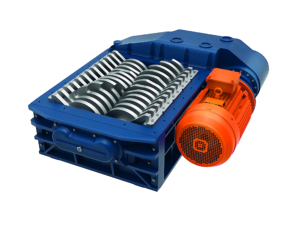
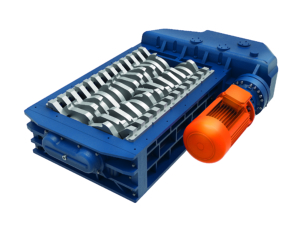
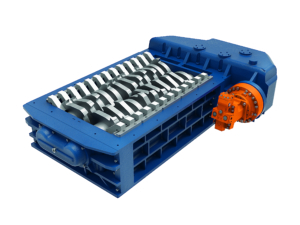
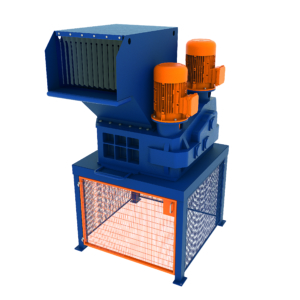
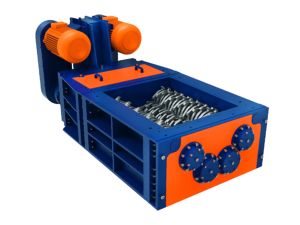
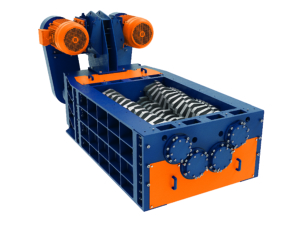
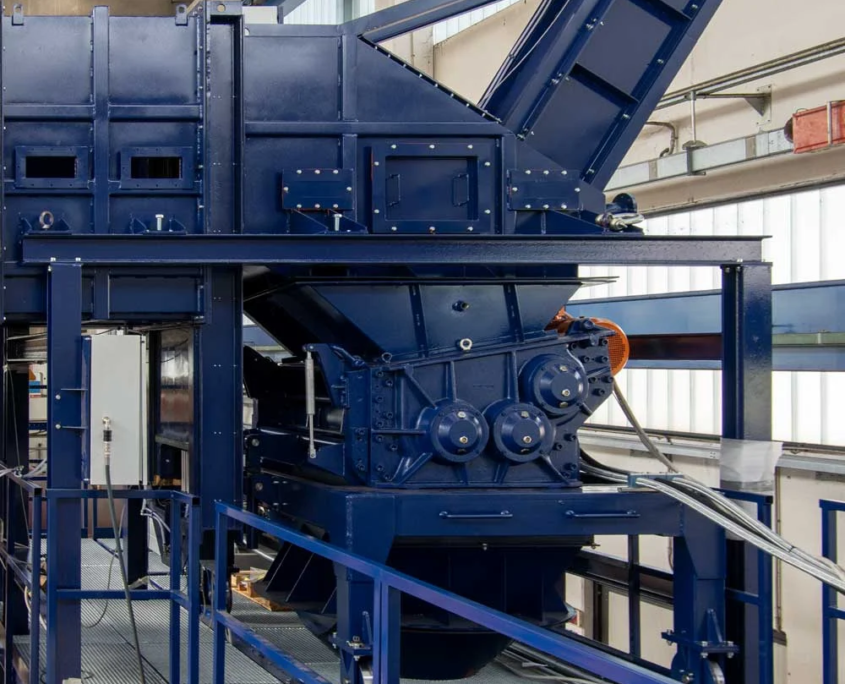
SatrindTech Industrial Shredders

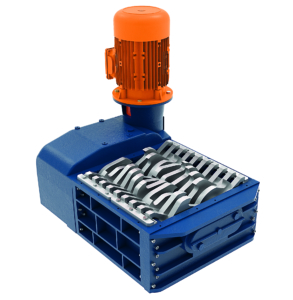
SatrindTech industrial shredders are designed to reduce volume and prepare waste before sorting, separation, recycling, or recovery processes. Their range includes 2, 3, and 4-shaft shredders, with configurations for plastics, WEEE (Waste Electrical and Electronic Equipment), tires, pallets, drums, industrial waste and sanitary waste. At Reverter Industries, we analyze each application to select the most suitable model, shredding chamber, and configuration.

The choice of shredder depends on the type of waste, the input size, the processing flow rate, and the required final particle size. If you need to compare SatrindTech with other shredding technologies or learn about solutions for other materials and applications, please consult our range of industrial shredders for recycling.

We’ll call you

This contact form is deactivated because you refused to accept Google reCaptcha service which is necessary to validate any messages sent by the form.

Why choose a SatrindTech shredder?

  • A range adaptable to various applications: SatrindTech offers industrial shredders with two-, three-, and four-shaft configurations, electric or hydraulic drives, and different shredding chamber sizes.

  • Various cutting configurations: Depending on the model, different blade thicknesses and chamber widths can be selected, allowing the equipment to be adapted to the type of material and the process requirements.

  • Wide range of materials: The product line includes solutions for processing plastics, industrial waste, wood, paper, WEEE, tires, food waste, medical waste, and textiles, among other applications.

  • Different capacity levels: SatrindTech offers everything from compact 11-kW units, such as the F15, to 90-kW industrial four-shaft shredders, such as the 4S120.

  • Integration by Reverter Industries: At Reverter Industries, we can evaluate the integration of the crusher into a processing line that includes feeding, conveying, sorting, separation, and automation systems.

Which SatrindTech shredder should you choose: 2, 3 or 4 shafts?

SatrindTech shredders offer different configurations depending on the type of waste, required processing capacity and desired output size. The choice between two-, three- and four-shaft machines depends on the material characteristics and the specific requirements of the process.

Configuration Features Typical applications
2 shafts Volume reduction using two counter-rotating shafts. Suitable for bulky and heterogeneous materials. Industrial waste, plastics, pallets, drums and tyres.
3 shafts Combine size reduction with greater control over the processed material, depending on the configuration. Plastics, paper, healthcare waste and electronic components.
4 shafts Feature two pairs of shafts for more controlled shredding and a more uniform output material. WEEE, plastics, industrial waste, wood and paper.

Choosing the right configuration depends on more than just the number of shafts. Other factors to consider include power, shredding chamber dimensions, blade thickness and required processing capacity.

At Reverter Industries, we analyse these parameters to select the most suitable SatrindTech model and assess its integration into the facility.

SatrindTech range of crushers

Twin-shaft crushers

Twin-shaft shredders are ideal for reducing the volume of bulky, heterogeneous, or difficult-to-handle materials.

The two counter-rotating rotors capture and shred the material using interchangeable blades. Depending on the model, they can be driven electrically or hydraulically.

F15

Compact, twin-shaft, electrically driven shredder, suitable for installations with moderate production requirements.

Main features:

  • Power: 11 kW
  • Blade thickness: 15 or 30 mm
  • Shredding chambers from 488 × 620 mm to 1,268 × 620 mm
  • Applications: food waste, healthcare waste, plastic, paper, and industrial waste
  • Approximate production: between 200 and 800 kg/h, depending on the material and configuration.

Technical specifications

K25

Two-shaft electric shredder designed for reducing the volume of industrial waste and bulky materials.

Main features:

  • Power: 18.5 kW
  • Blade thickness: 30 or 50 mm
  • Shredding chambers from 758 × 700 mm to 1,258 × 700 mm
  • Applications: food waste, plastics, industrial waste, plastic pallets and drums
  • Approximate production up to 1,500 kg/h, depending on the material.

Technical specifications

K30

Twin-shaft electric shredder for industrial applications requiring greater robustness and processing capacity.

Main features:

  • Power: 22 kW
  • Blade thickness: 30 or 50 mm
  • Shredding chambers from 758 × 850 mm to 1,258 × 850 mm
  • Applications: plastics, industrial waste, tires, and plastic drums
  • Approximate production of up to 2,000 kg/h for industrial waste.

Technical specifications

K50

Twin-shaft hydraulic shredder for heterogeneous materials, demanding applications, and jobs requiring high cutting force.

Main features:

  • Hydraulic drive.
  • Power: 37 kW.
  • Blade thickness: 30 or 50 mm.
    Shredding chambers from 758 × 850 mm to 1,258 × 850 mm.
  • Applications: plastics, industrial waste, tires, municipal solid waste, and metal drums.
    Approximate production up to 3,000 kg/h, depending on the material.

Technical specifications

Three-shaft crushers

Three-shaft shredders combine volume reduction with greater control over the size of the resulting material.

This technology is particularly advantageous when the shredded material is subsequently used to feed separation, classification, or processing equipment.

3K30

Compact three-shaft electric shredder designed for more controlled shredding in a single process.

Main features:

  • Total power: 22 kW, via two 11 kW motors.
  • Blade thickness: 15 or 30 mm.
  • Shredding chambers: 488 × 525 mm and 728 × 525 mm.
  • Applications: medical waste, electronic components, plastic, textiles, and paper.
  • Approximate production: between 100 and 400 kg/h, depending on the material.

Technical specifications

Four-shaft crushers

Four-shaft shredders use two pairs of rotors arranged on different planes.

The upper shafts perform the initial material reduction, while the lower shafts complete the shredding process, resulting in a more uniform and controlled outcome. This technology is suitable for WEEE (Waste Electrical and Electronic Equipment), plastics, industrial waste, paper, wood, and medical waste.

4S60

Four-shaft electric shredder for medium-capacity industrial applications.

Main features:

  • Total power: 44 kW, via two 22 kW motors.
  • Available blade thicknesses: 15, 19, 29, or 43 mm.
  • Shredding chambers from 698 × 800 mm to 1,218 × 800 mm.
  • Applications: plastics, industrial waste, wood, WEEE, and paper.
  • Approximate production: between 1,000 and 1,800 kg/h.

Technical specifications

4S120

Four-axis electric shredder for high-capacity applications and demanding industrial work.

Main features:

  • Total power: 90 kW, via two 45 kW motors.
  • Available blade thicknesses: 30, 50, or 75 mm.
  • Shredding chambers from 1,000 × 1,040 mm to 1,500 × 1,040 mm.
  • Applications: plastics, industrial waste, wood, WEEE (Waste Electrical and Electronic Equipment), and paper.
  • Approximate production capacity of up to 5,000 kg/h for certain WEEE applications.

Technical specifications

How to choose a SatrindTech shredder

Choosing a shredder shouldn’t be based solely on its power. To determine the right equipment, it’s necessary to analyze:

  • Type and composition of the material.
  • Maximum feed size.
  • Bulk density.
  • Moisture content and presence of impurities.
  • Required production rate.
  • Desired final size.
  • Feeding system.
  • Operating hours.
  • Equipment located upstream and downstream of the shredder.

At Reverter Industries, we analyze each application to determine the most suitable technology, shredding chamber, blade thickness, and auxiliary equipment.

Which SatrindTech shredder to choose according to the material?

The SatrindTech range can process different types of waste using two-, three- and four-shaft shredders. These are some of the models to consider depending on the material to be processed:

Material SatrindTech models
Plastics F15, K25, K30, K50, 3K30, 4S60 and 4S120
Tyres K30 and K50
WEEE and electronic components 3K30, 4S60 and 4S120
Pallets K25
Wood 4S60 and 4S120
Paper and cardboard F15, 3K30, 4S60 and 4S120
Plastic drums K25 and K30
Metal drums K50
Industrial waste F15, K25, K30, K50, 4S60 and 4S120
Healthcare waste F15 and 3K30
Textiles 3K30
Municipal solid waste (MSW) K50

This classification is intended as an initial guide. The final choice depends on the characteristics of the waste, the required processing capacity and the desired output size.

For tyre processing, the K30 and K50 models are suitable options within the SatrindTech range. To understand how shredding fits into the complete treatment process, read our article on the tyre recycling process.

Frequently asked questions about SatrindTech shredders

What is the difference between SatrindTech 2-, 3- and 4-shaft shredders?

2-shaft shredders are primarily designed to reduce the volume of bulky and heterogeneous materials. 3- and 4-shaft shredders allow for more controlled shredding, depending on the model and configuration, when the process requires specific characteristics of the output material.

Which SatrindTech model is suitable for shredding tyres?

Within the SatrindTech range, the K30 and K50 models are suitable for tyre shredding applications. The choice depends on tyre dimensions, required processing capacity and the operating conditions of the facility.

What is the difference between an electric and a hydraulic shredder?

Electric shredders use electric motors to drive the shredding shafts, while hydraulic shredders transmit motion through a hydraulic system. The choice depends on the material, required cutting force, operating conditions, and maintenance and operational requirements.

What processing capacity do SatrindTech shredders offer?

Processing capacity depends on the model, material and equipment configuration. The range includes compact shredders for moderate throughput as well as higher-capacity industrial machines. The values provided in the technical specifications are indicative and should be assessed according to actual operating conditions.

Can a SatrindTech shredder be integrated into an existing recycling plant?

Yes. Reverter Industries can assess the integration of a SatrindTech shredder into an existing facility, considering the feeding, conveying, sorting and separation systems, as well as the available space and required processing capacity.
Get in touch with us and find out how we can collaborate