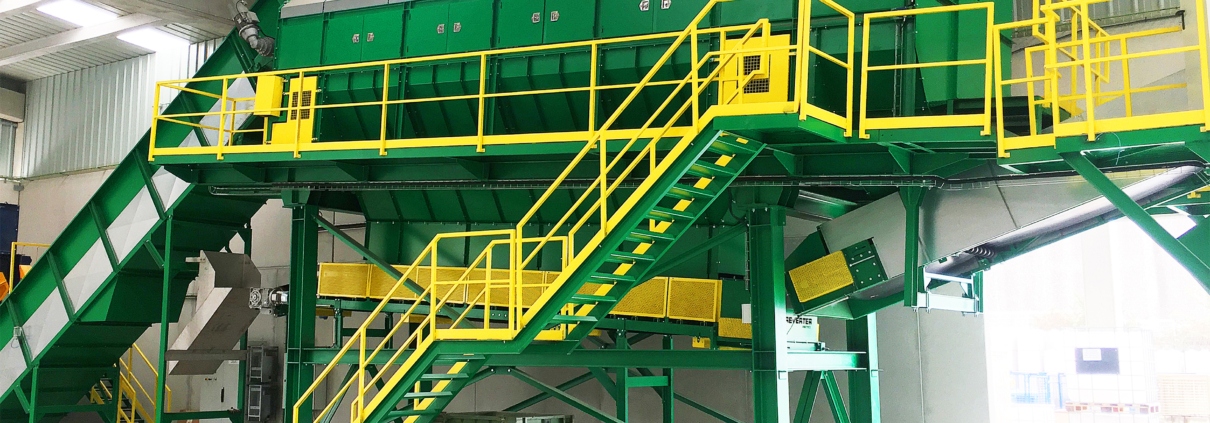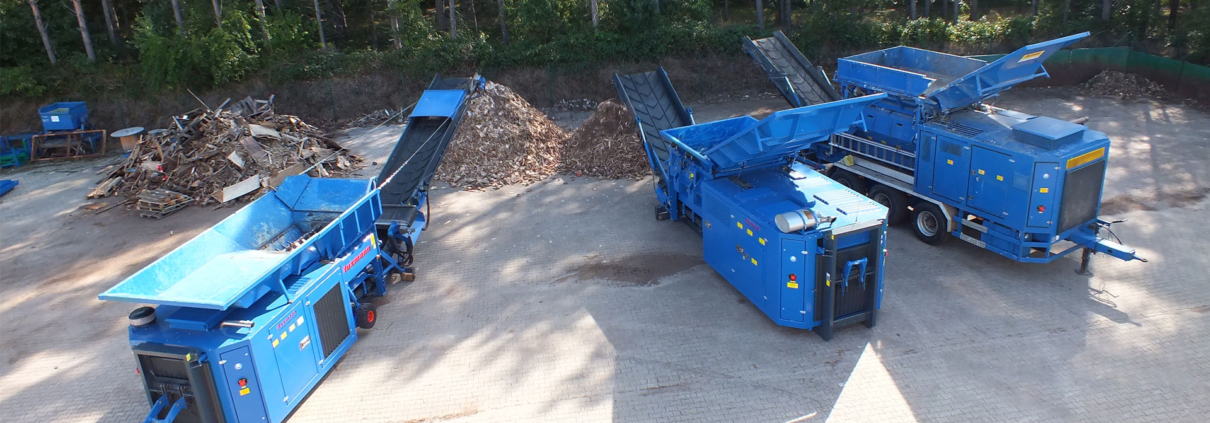
Robust, tailor-made machinery for waste sorting, transport and treatment, designed to optimise processes and reduce operating costs.

How to Choose Recycling Equipment: Complete Guide
Cómo Elegir Maquinaria para el Reciclaje

Choosing the right recycling machinery is a critical step in the waste management process, as a well-informed choice can optimize resources, reduce costs and contribute significantly to a company’s sustainability. This comprehensive guide addresses the key factors to consider when selecting recycling equipment, the types of machinery available and how a strategic selection can boost the profitability and sustainability of your recycling operations. Find out how to choose recycling machinery below.

Key Factors to Consider in the Selection of Recycling Equipment

Type of Material to Recycle

The first step is to define the type of waste to be processed by the machinery. Each type of material – be it paper, metals, plastics, organic waste, or industrial waste – has characteristics that require specific equipment to achieve efficient recovery. For example, primary and secondary shredders are essential for bulky waste such as wood, while densimetric and magnetic separators are essential for metallic materials.

Production capacity

Another important factor is the amount of waste expected to be processed per hour or day. The production capacity should be proportional to the operational demands of the plant. Choosing a machine of adequate capacity ensures that recycling processes are efficient and continuous, with no downtime due to overloading.

Available Space

It is critical to evaluate the space available in the plant for machinery and to ensure efficient workflow. For companies with limited areas, there are compact or modular equipment options that can optimize space.

Energy Consumption

Sustainability is one of today’s top priorities, so opting for energy-efficient machinery can be a long-term advantage. Recycling equipment with advanced technology not only reduces energy costs, but also lowers the carbon footprint of operations.

Ease of Maintenance

Maintenance costs and times should be evaluated, as machines that require fewer interventions and are easy to maintain help reduce operational downtime and associated costs. Reliable suppliers often offer after-sales support and preventive maintenance programs to maximize equipment life.

Types of Recycling Machinery and their Application

Shredders and Granulators

Primary and secondary shredders play an essential role in reducing the size of waste to facilitate its subsequent treatment.

  • Primary Shredders: They are used to break down bulky materials into more manageable fragments. They can process waste such as wood, MSW (municipal solid waste), and industrial materials.
  • Secondary Shredders: They perform a finer and more homogeneous shredding, ideal for waste such as plastics and wood, in preparation for compaction or granulation process.

Densimetric and Magnetic Separators

Densimetric and magnetic separators are essential for separating recyclable materials according to their density or magnetic properties.

  • Densimetric Separators: Used primarily to separate heavy materials from light materials, densimetric separators are effective in sorting plastics, paper, metals, and RDF (refuse derived fuel).
  • Magnetic Separators: This equipment allows the extraction of ferrous materials and is ideal for recycling plants that process metals or industrial waste.

Conveyor Belts and Conveyors

Conveyor belts and conveyors are essential for the movement of materials within the recycling plant.

  • Belt Conveyors: Facilitate the continuous transport of materials from one point to another and are adaptable to various lengths and capacities.
  • Metal Slat Conveyors: Offer a robust structure for the transport of heavy materials, such as scrap metal or industrial waste.

Screens and trommels

Screens and trommels allow the separation of materials according to their size.

  • Vibrating screens: Used to separate finer particles, such as dust and light particles, which are common in industrial and domestic waste.
  • Trommels: These are rotating cylinders that classify materials by size through continuous screening and are useful in plants that process MSW or industrial waste.

Dosing Equipment

Dosing systems help regulate the flow of materials in the recycling line, optimizing the feeding process of shredders and conveyor belts.

  • Dosing feeders: They guarantee a continuous and controlled feeding of materials, especially useful in industrial recycling applications where precision is required.

Impact of Good Machinery Selection on Profitability and Sustainability

The right selection of recycling machinery can transform the profitability and sustainability of an operation:

  • Process Optimization: Efficient machinery speeds processing time and reduces operating costs by optimizing material flow and minimizing waste.
  • Carbon Footprint Reduction: Modern recycling machinery allows materials to be recycled and reused, thereby reducing natural resource extraction and associated emissions.
  • Reduced Operating Costs: Recycling machinery that processes materials locally and efficiently reduces transportation and waste disposal costs, increasing overall profitability.

Steps to Implementing an Efficient Recycling Line

  1. Needs Analysis: Identify the type and quantity of material to be recycled, as well as the desired output specifications (e.g., granular plastics, metals, paper).
  2. Space and Logistics Assessment: Determine available space for machinery and optimal layout for material flow.
  3. Supplier Selection: Working with machinery suppliers that offer technical support and preventive maintenance is key to ensure continuous plant operation.
  4. Personnel Training: Personnel must be trained in machinery operation and maintenance, as well as best safety practices.
  5. Preventive Maintenance: Implement a regular maintenance program to maximize equipment life and avoid unplanned downtime.

Innovation and New Opportunities in the Recycling Industry

The recycling industry is constantly evolving, driven by innovative technologies that optimize efficiency and sustainability:

  • Automation and Robotics: Robotic sorting systems and process automation reduce the need for human intervention and increase accuracy.
  • Complex Materials Recycling: New technologies are enabling recycling of complex materials such as lithium batteries, construction and demolition waste, and wind turbine blades.

Conclusion

Choosing the right recycling machinery is a strategic decision that directly impacts the efficiency and sustainability of your operations. By considering factors such as material type, throughput capacity, energy consumption and ease of maintenance, you can maximize throughput and minimize costs. In addition, taking advantage of technological innovations and automation opportunities can position your company at the forefront of sustainable recycling.

If you are looking to improve your processes, purchasing high-quality recycling machinery is the key. Contact us and discover the perfect solution for your company.
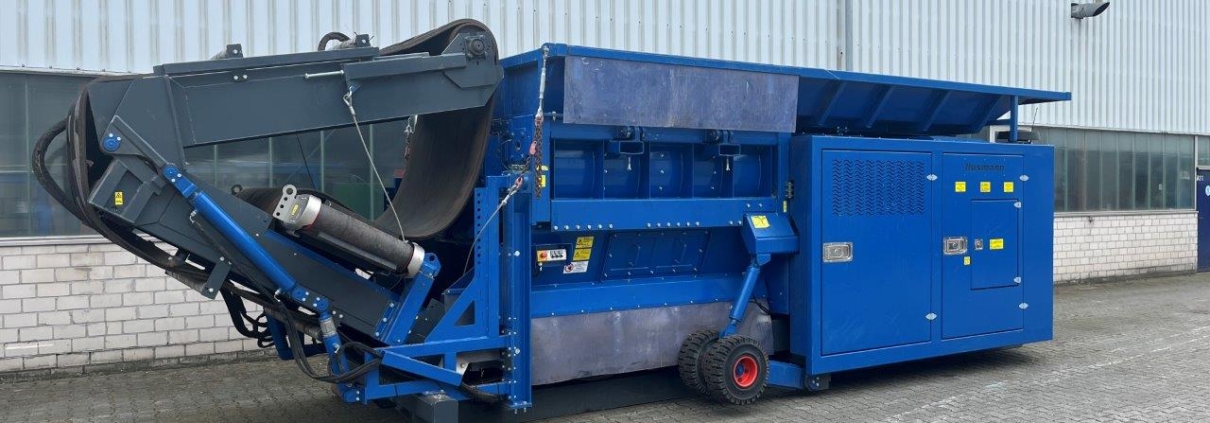
Maintenance of industrial waste shredders is essential to ensure their efficient operation and prolong their service life. Proper maintenance contributes to safety, productivity and sustainability in waste management. There are different types of maintenance, such as ordinary and extraordinary maintenance, to address the specific needs of these machines. It is essential to establish standardized procedures and train personnel to optimize performance and minimize the risk of failure.

Importance of Maintenance of Industrial Shredders

Maintenance of industrial shredders is essential to ensure their effective operation and prolong their useful life. This process contributes to the optimization of resources and compliance with current waste management regulations.

Efficiency and Sustainability in Waste Management

Properly maintained shredders can operate at their maximum capacity, resulting in significant cost reductions and more efficient use of resources. Good maintenance not only preserves the proper functioning of the machinery, but also positively affects organized sustainability.

  • Promotes effective recycling of materials.
  • Reduces the volume of waste reaching landfills.
  • Contributes to the circular economy by maximizing the reuse of resources.

Impact on Safety and Productivity

Keeping shredders in optimal condition is also critical to ensure operator safety. Well-maintained machines are less prone to unexpected failures, which decreases the risk of workplace accidents.

  • Reduces injuries caused by machinery malfunctions.
  • Increases productivity by minimizing downtime.
  • Provides a safer and more efficient work environment.

Types of Shredder Maintenance

Crusher maintenance falls into two main categories: ordinary maintenance, which includes routine activities, and extraordinary maintenance, which is carried out according to the specific conditions of the machine.

Ordinary Maintenance

This type of maintenance is essential to maintain optimal shredder performance. It includes several important tasks:

  • Lubrication Check: It is critical to ensure that oil levels in the gearboxes and bearings are adequate. Proper lubrication prevents wear on parts and contributes to smooth operation.
  • Component Cleaning: Critical areas, such as intermediate seals and spaces between crushing chamber bulkheads, should be cleaned on a regular basis. This prevents buildup that can cause malfunctions.
  • Checking Cutting Tools: Blades should always be properly adjusted. Loose blades can interfere with each other, which can cause significant damage and decrease the efficiency of the machine.
  • Blade Wear Control: Monitoring the condition of blades is vital. A sharp edge optimizes productivity, while a worn edge can drastically reduce shredding performance.

Extraordinary Maintenance

Extraordinary maintenance is carried out in situations that require more critical interventions:

  • Emergency Repairs: When there is deep wear, some parts may require immediate replacement to prevent further damage to the machine.
  • Thorough Overhauls: After a period of heavy use, it is advisable to perform detailed inspections to ensure that all components are in good condition and prevent unexpected failures.
  • Technology Upgrades: Integrating new technologies can be beneficial. Incorporating modern parts helps improve both the efficiency and safety of the equipment.

Implementing standard procedures is essential to ensure optimal operation of industrial shredders. This systematic approach allows for more efficient maintenance management and helps prevent unexpected failures.

Standard Maintenance Procedures

Maintenance Planning

Maintenance planning should establish a rigorous schedule that includes specific weeks and frequencies for carrying out activities. It is crucial that this plan is flexible and adapts to operating conditions and machine usage. The assignment of responsible parties and the inclusion of necessary resources are fundamental to the success of this stage.

Staff training

Ongoing staff training is vital to ensure that all operators and technicians understand best practices in equipment operation and maintenance. Training sessions on maintenance procedures, problem identification and safe operation should be conducted to reinforce a culture of safety and efficiency on the job.

Maintenance Records

Keeping detailed records of all maintenance activities is critical for monitoring and continuous improvement. These records should include:

  • Dates of maintenance performed.
  • Procedures performed.
  • Observations and recommendations for future interventions.

A good record keeping system facilitates the identification of patterns and makes it possible to anticipate future needs.

Failure Analysis

When a failure occurs, it is necessary to conduct a thorough analysis to determine the root cause. This procedure helps to understand recurring failures and implement effective solutions. Identifying and correcting the underlying causes can prevent similar problems in the future, improving equipment reliability.

Importance of Safety in Crusher Maintenance

Safety in shredder maintenance is essential to prevent incidents and ensure a safe working environment. The correct implementation of preventive measures can significantly reduce the risk of workplace accidents.

Prevention of Occupational Injuries

Industrial crushers, due to their operation and design, present potential hazards. Proper injury prevention is key to protecting operatives. Common injuries include:

  • Cuts and abrasions from contact with sharp components.
  • Mechanical accidents during operation and maintenance.
  • Injuries from falls in disorganized work areas.

Establishing safety protocols and ongoing training on the safe operation of machinery helps to minimize these risks. The use of personal protective equipment (PPE) is also essential.

Safety Regulations for Industrial Shredders

Compliance with safety regulations is crucial in the industrial environment. Among the regulations to be followed, the following stand out:

  • Specific European Union regulations on machinery.
  • Codes of good practice in the operation and maintenance of shredding equipment.
  • Occupational safety standards aimed at protecting workers.

Adhering to these regulations not only ensures a safer environment, but also fosters a safety culture within the organization. Regulatory training is a must for all employees involved in maintenance.

Conclusion

In conclusion, proper maintenance of industrial waste shredders is essential to ensure the efficiency, safety and durability of this equipment in recycling plants. The implementation of a structured maintenance plan, including both ordinary and extraordinary interventions, allows optimizing the performance of the machinery and reducing the risk of failures. In addition, training personnel in maintenance and safety best practices ensures a safer and more productive working environment. With a systematic and preventive approach, recycling plants can maximize their investment in industrial shredders, contributing to a more sustainable and profitable waste management.

If you need to optimize your recycling process, purchasing an industrial recycling shredder is the perfect solution. Contact us and find the ideal equipment for your business.

In recycling plants, trommels have emerged as essential components to optimize the separation and classification of materials, adapting to a range of needs and promoting more efficient and organized waste management processes. Their versatility makes them not only key tools for a circular economy but also facilitates sustainability within the sector.

The importance of trommels in waste management

The large amount of waste generated today demands more effective management methods. In this context, trommels enable efficient sorting and organizing of waste, which prevents cross-contamination and improves resource recovery rates, thus reducing pressure on landfills.

Efficiency in the classification process

The rotating design of trommels is crucial for their efficiency: it allows the simultaneous sorting of materials of different sizes, optimizing workflow in recycling plants. Additionally, the ability to separate materials from the outset reduces costs associated with handling contaminated waste and improves the quality of recycled materials.

Application versatility

The versatility of trommels is highlighted by their ability to process a variety of materials, from organic waste to metals. This makes them suitable for use in different sectors and applications, such as composting, mining, and electronics recycling. Thanks to this flexibility, trommels become a profitable and sustainable investment for any recycling plant.

Reduction of operating costs

A significant advantage of trommels is cost reduction. Proper sorting from the beginning of the process decreases the time and resources needed to manage mixed or contaminated materials. This represents an improvement in the economic efficiency of recycling plants, fostering a more competitive and sustainable industry.

Conclusion

Trommels are an effective response to the challenges of modern waste management. Their capacity to increase efficiency, adapt to diverse needs, and reduce costs consolidates them as essential elements in the advancement toward a circular economy and more responsible waste management. Contact us for more information.

Video Tromel Web

Optimize your sorting process with our recycling trommels. Contact us and find the ideal machinery for your project.

Husmann shredders are industrial equipment designed for the reduction of bulky waste and demanding materials in recycling and waste treatment plants. Their various configurations allow them to process materials such as wood, biomass, industrial waste, and municipal solid waste.
Reverter Industries integrates Husmann shredding solutions into complete systems, selecting the equipment based on the type of waste, input size, processing capacity, and required final particle size.

Request technical advice

The importance of crushers in waste management

Shredders are essential for companies dedicated to waste management, recycling, and other industries that need to reduce the size of materials before processing. The main advantages of shredders include:

  • Volume reduction: By shredding large materials, handling and storage become easier, which reduces operational costs.
  • Recycling preparation: Shredders break down large materials into smaller pieces that can be easily processed in recycling plants.
  • Increased efficiency: Advanced shredding systems allow for continuous processing of materials, reducing downtime and increasing productivity.

In short, having high-quality shredders not only improves process efficiency but also promotes more responsible waste management, encouraging recycling and sustainability.

Why choose Husmann crushers?

German engineering is renowned for its precision, durability, and innovative design. In this sense, Husmann is no exception. Husmann shredders are synonymous with high technology applied to waste management. Some of the reasons why this brand has become a leader in the sector are:

  • Reliability and durability: Built to withstand the harshest conditions, Husmann shredders are made from the highest quality materials, ensuring a long service life.
  • Advanced technology: Equipped with efficient engines and control systems that make even the most complex operations safe and easy.
  • Customization: Each shredder can be equipped with various accessories and configurations that adapt to specific customer needs, optimizing performance based on the type of material being processed.
  • Sustainability: Thanks to their energy efficiency, Husmann shredders help reduce environmental impact by optimizing energy use and minimizing emissions.

They are designed to handle a wide range of materials, making them ideal for various industries, such as municipal waste management, plastic and wood recycling, and construction debris crushing.

Husmann equipment is part of the solutions that Reverter Industries integrates for different waste and treatment processes. See our complete range of industrial recycling shredders to learn about other available technologies and applications.

Below, we detail the features of two of our most prominent models: the Husmann HL I and Husmann HL II.

Husmann shredder range

Husmann HL I: single-shaft shredder

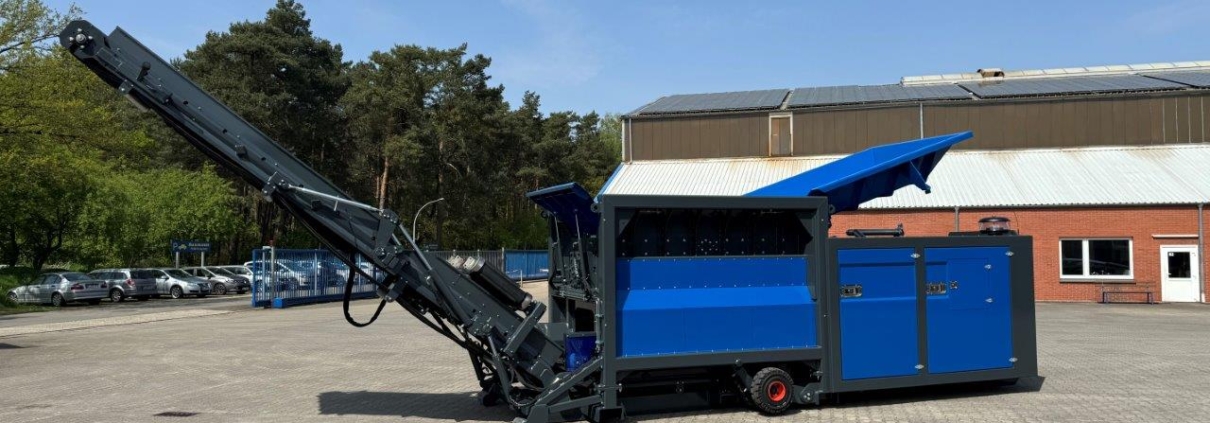
The Husmann HL I uses a single-shaft configuration for reducing materials such as wood, industrial waste, plastics and light metals. It is designed for applications where bulky waste needs to be reduced and prepared for the next stages of the treatment process.

Technical data for the Husmann HL I 1222

  • Type: Single-shaft HL I 1222 shredder with hook.
  • Feed opening: 1,750 mm x 1,560 mm.
  • Engine: CAT C9.3 EURO V with 280 KW power.
  • Total weight: Approximately 22,500 kg.

Included accessories

The Husmann HL I is equipped with several accessories that optimize performance and make maintenance easier:

  • Reversible fan, preventing dust and dirt accumulation in the engine.
  • Screen grid, allowing adjustment of shredded material size.
  • Maintenance doors, providing easy access to internal parts for inspections and repairs.
  • Remote control for safe and efficient operation.
  • Ejection door for easy discharge of materials.
  • Hydraulically foldable hopper, optimizing material loading.
  • Neodymium magnet separator, effectively separating metals.
  • Lifting axle and centralized lubrication to optimize performance and durability.
  • Extended discharge conveyor, increasing operational flexibility.

Applications of the Husmann HL I

The Husmann HL I is ideal for shredding materials like wood, industrial waste, plastics, and light metals. Its 280 KW engine allows it to process large volumes of material in continuous cycles, making it an efficient choice for companies needing to handle large quantities of waste quickly and effectively.

Husmann HL II: double-shaft shredder

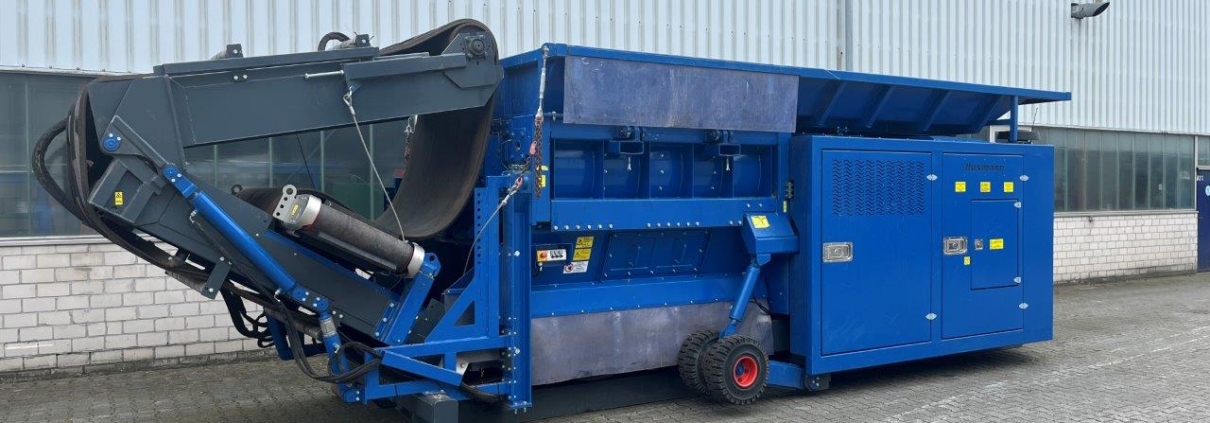
The Husmann HL II uses a double-shaft configuration designed for processing more resistant materials and bulky waste. It is suitable for applications such as industrial waste, construction waste and other materials that require robust shredding before moving on to the next stages of the treatment process.

Technical data for the Husmann HL II 1622

  • Type: Double-shaft HL II 1622 shredder with hook.
  • Feed opening: 1,750 mm x 1,560 mm.
  • Engine: CAT C13 EURO V with 370 KW power.
  • Total weight: Approximately 24,000 kg.

Included accessories

The Husmann HL II is also equipped with a range of accessories that maximize operational capacity:

  • Reversible fan, keeping the engine clean and functional.
  • Remote control, allowing safe remote operation.
  • Internal ejection doors, facilitating the expulsion of shredded materials.
  • Hydraulically foldable hopper, making it easier to load large volumes of material.
  • Neodymium magnet separator, for efficient metal separation.
  • Counter blade, increasing shredding efficiency.
  • Discharge conveyor, improving post-processing material management.

Applications of the Husmann HL II

This model is specially designed to handle tougher materials like construction debris, industrial waste, and other bulky refuse. Its double-shaft design allows for greater processing capacity, making it the ideal choice for companies dealing with large quantities of difficult-to-shred materials.

Husmann HL I vs HL II comparison

The Husmann HL I and HL II models are designed for different shredding requirements. The main difference lies in their single- or double-shaft configuration and in the type of materials each machine is intended to process.

Feature Husmann HL I 1222 Husmann HL II 1622
Configuration Single shaft Double shaft
Feed opening 1,750 × 1,560 mm 1,750 × 1,560 mm
Engine CAT C9.3 EURO V – 280 kW CAT C13 EURO V – 370 kW
Approx. weight 22,500 kg 24,000 kg
Applications Wood, industrial waste, plastics and light metals Industrial waste, construction waste and more resistant bulky materials

The choice between a Husmann HL I or HL II should be based on the input material, its dimensions, the required processing capacity and the desired output after shredding. Reverter Industries analyses these parameters to define the most suitable configuration for each installation.

How to choose a Husmann shredder

Choosing a Husmann shredder should start with the characteristics of the waste and the process in which the machine will be integrated. Before selecting a model, several factors should be analysed:

  • Type of material: wood, biomass, industrial waste, municipal waste, plastics, metals or other materials.
  • Input material size: dimensions and characteristics of the material entering the shredder.
  • Processing capacity: volume of material that needs to be processed during operation.
  • Required output size: level of size reduction needed for the next stages of the process.
  • Shredding configuration: selection between single- and double-shaft machines depending on the material and application.
  • Integration into the installation: feeding, discharge, separation and connection with the rest of the equipment in the line.

Reverter Industries analyses these parameters to select the most suitable shredder and configuration for each project, both for new installations and for existing treatment processes.

Integration of Husmann shredders into recycling plants

A shredder does not operate in isolation. Its performance also depends on how it is integrated with the feeding, conveying, separation and sorting systems within the installation.

Reverter Industries can integrate Husmann shredders into new or existing recycling plants, defining the line configuration according to the type of waste, processing capacity and the subsequent stages of the process.

The integration may include auxiliary equipment before and after shredding to ensure a continuous material flow and adapt the process to the treatment or recovery objectives of each installation.

Frequently asked questions about Husmann shredders

What is the difference between the Husmann HL I and HL II?

The Husmann HL I uses a single-shaft configuration, while the Husmann HL II operates with a double-shaft system. The HL I is designed for materials such as wood, industrial waste, plastics and light metals, while the HL II is intended for more resistant and bulky waste, including certain industrial and construction waste streams.

What materials can Husmann shredders process?

Depending on the model and configuration, Husmann shredders can be used for materials such as wood, biomass, industrial waste, municipal and bulky waste, plastics, light metals and certain construction waste.

How do you choose the right Husmann shredder?

The selection mainly depends on the type and size of the input material, required processing capacity, desired output size and the configuration of the rest of the installation.

Can a Husmann shredder be integrated into an existing recycling plant?

Yes. Reverter Industries can assess the integration of the shredder into an existing installation, taking into account the feeding, conveying, separation and sorting systems that form part of the process.

Do you need a Husmann shredder for your installation?

At Reverter Industries, we analyse the type of waste, processing capacity and the requirements of each process to define the most suitable shredding solution and integrate it into the installation.

Request technical advice