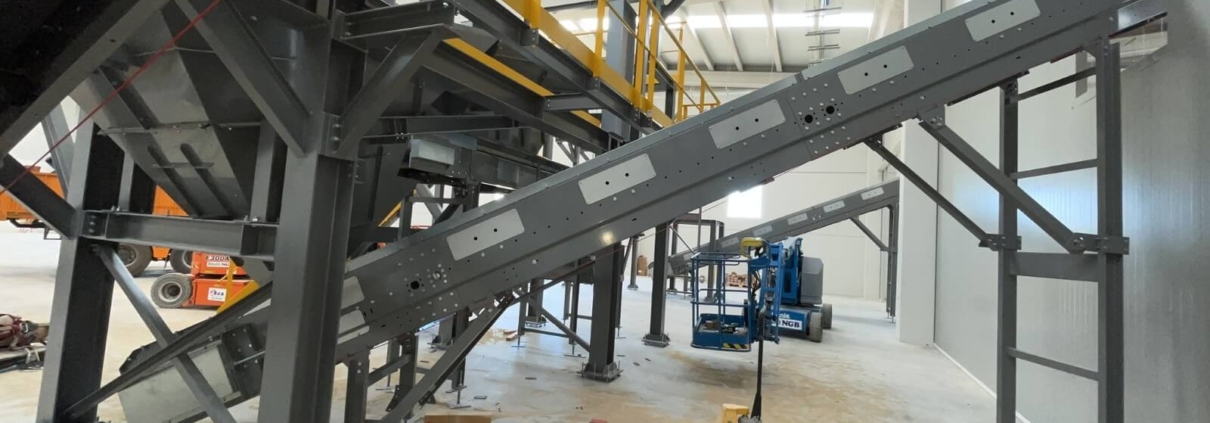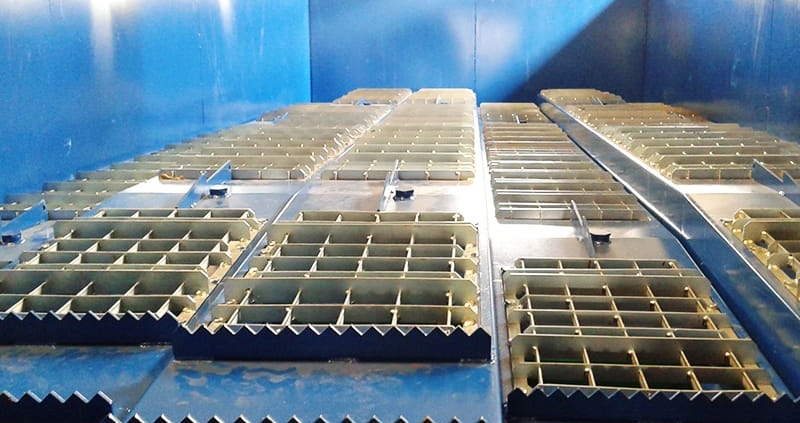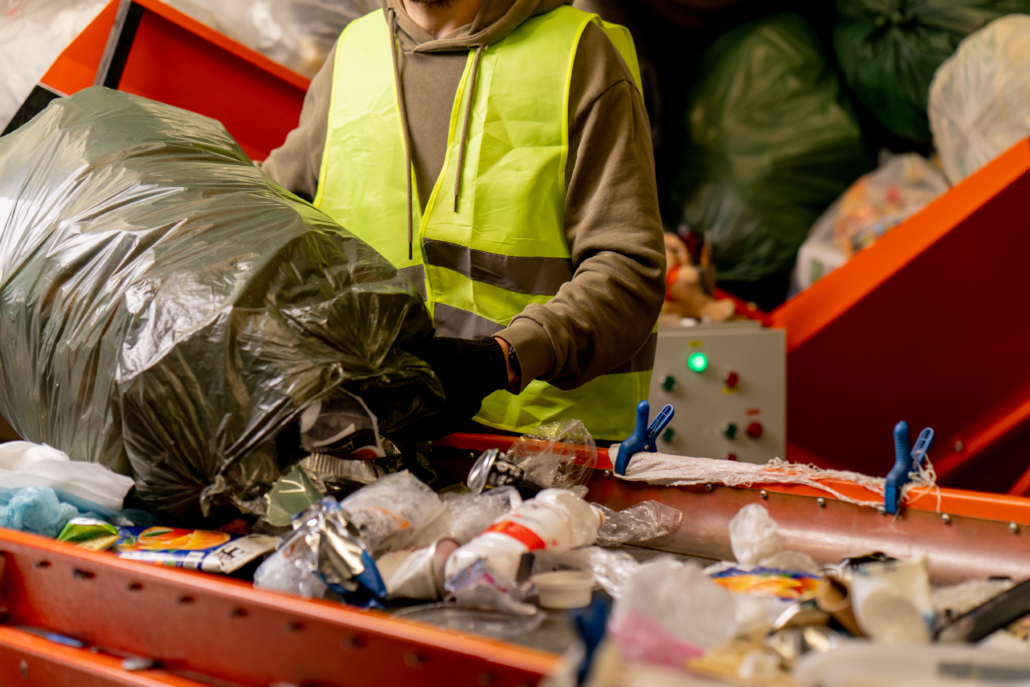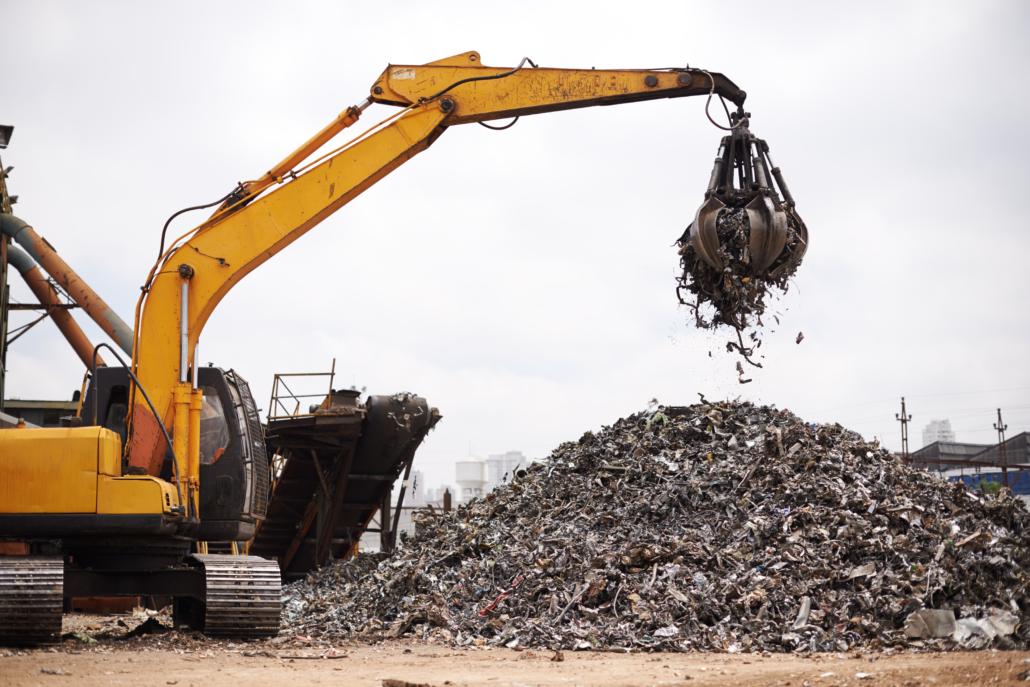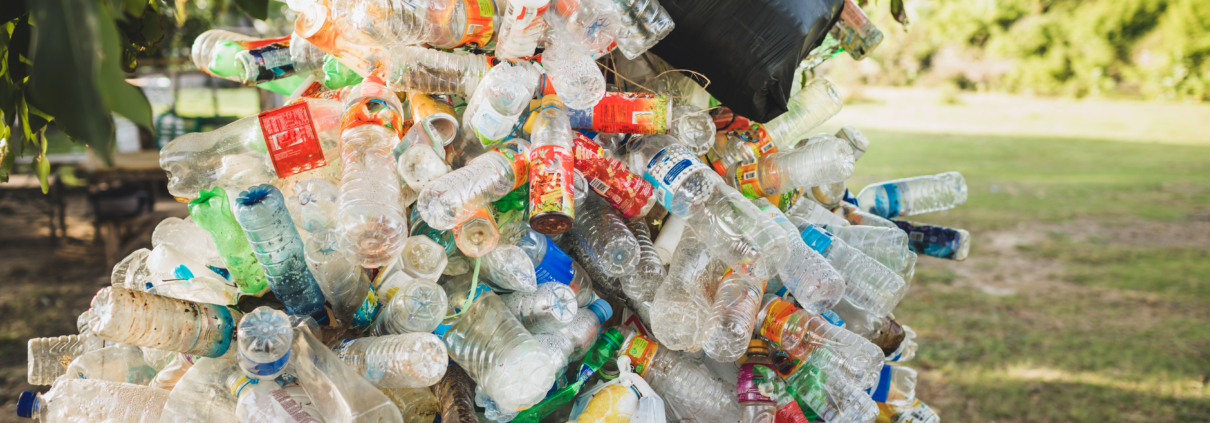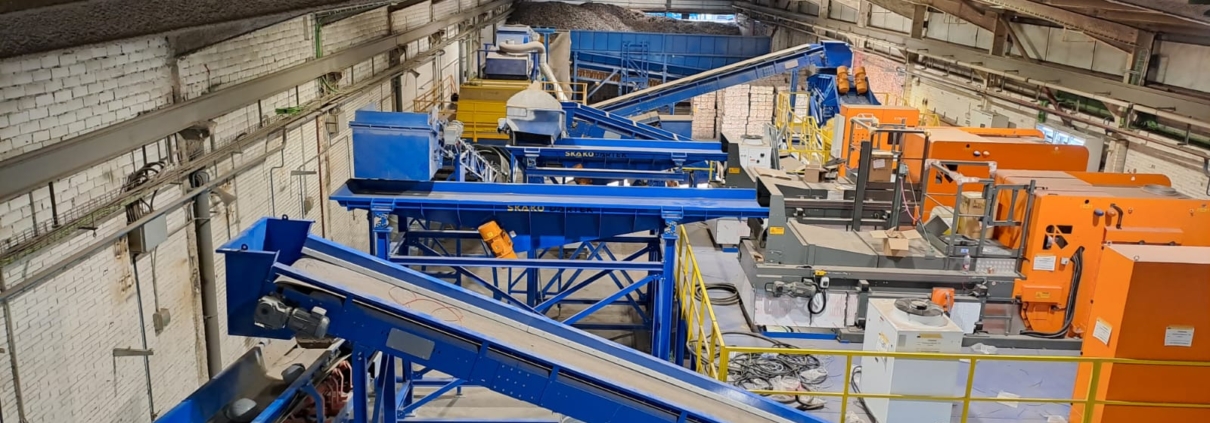
Robust, tailor-made machinery for waste sorting, transport and treatment, designed to optimise processes and reduce operating costs.

A ballistic separator is an essential machine in modern recycling plants. Its main function is to classify municipal solid waste, lightweight packaging, paper, cardboard, plastics, wood, or construction waste according to their shape, size, and behavior during the separation process.

Thanks to this technology, treatment plants can improve the quality of recovered materials, increase sorting efficiency, and reduce the amount of waste sent to landfill. As a result, the ballistic separator has become a key solution for moving toward more automated, profitable, and sustainable waste management.

Separador balístico

What Is a Ballistic Separator?

A ballistic separator is a machine designed to divide waste into different fractions using the oscillating movement of an inclined surface made up of paddles or screens. This movement allows materials to be separated according to their physical characteristics.

The equipment generally distinguishes between:

  • Flat or 2D materials, such as paper, cardboard, or plastic film.
  • Rolling or 3D materials, such as bottles, containers, cans, or rigid packaging.
  • Fine fraction, made up of small particles that pass through the screens.

This classification facilitates the subsequent treatment of waste and improves the performance of other plant equipment, such as optical sorters, magnetic separators, shredders, or compactors.

How Does a Ballistic Separator Work?

The operation of a ballistic separator is based on the alternating movement of its inclined paddles. When waste enters the machine, each material behaves differently.

Flat materials tend to move in one direction, rigid or rolling objects move in another, and small particles fall through the perforations in the screen. This system enables fast and accurate separation without the need for constant manual intervention.

In addition, many models allow the inclination and speed to be adjusted to suit the type of waste being processed and improve the purity of the recovered fractions.

Main Components of a Ballistic Separator

To choose the right machine, it is important to understand its most relevant components.

Adjustable Chassis

The inclinable chassis allows the working angle of the separator to be modified, adapting the sorting process to different materials. This adjustment improves performance without the need to completely stop the process.

Classification Shafts and Paddles

The shafts generate the oscillating movement of the machine, while the paddles or screens drive the separation of waste. Their resistance is essential when working with heavy, wet, or abrasive materials.

Interchangeable Screens

Screens make it possible to separate the fine fraction from the rest of the materials. Models with bolted or easily accessible screens simplify maintenance and reduce downtime.

Feeding System

A regular and well-dosed feeding process improves the efficiency of the separator. That is why it is usually integrated with conveyor belts and other automated systems in the plant.

Types of Ballistic Separators by Application

Not all ballistic separators are designed for the same type of waste. The choice of model will depend on the material to be processed, the required capacity, and the necessary level of robustness.

Separators for Paper, Cardboard, and Lightweight Packaging

These machines are designed for light and dry materials. They are commonly used in packaging sorting plants, paper recovery centers, and recyclable waste treatment lines.

They allow paper, cardboard, flexible plastics, bottles, cans, and other packaging materials to be separated efficiently.

Separators for Municipal Solid Waste and Industrial Waste

These models are designed to work with more complex and heavier material flows. They are suitable for mixed municipal waste, plastic fractions, compacted packaging, or non-hazardous industrial materials.

Their structure is usually more resistant and prepared for intensive use.

Separators for Construction and Demolition Waste

When working with rubble, wood, bulky materials, or heavy impurities, more robust machines are required. These separators are prepared to withstand impacts, abrasion, and heavy workloads.

They are especially useful in construction and demolition waste recycling plants.

Advantages of Ballistic Separators in Recycling Plants

Installing a ballistic separator in a treatment plant offers important benefits:

  • Improves the quality of recovered materials.
  • Increases the efficiency of the sorting process.
  • Reduces dependence on manual sorting.
  • Optimizes the performance of other recycling equipment.
  • Reduces operating costs and downtime.
  • Supports compliance with recycling and sustainability targets.

By enabling greater automation, it also helps plants become more productive and competitive.

How to Choose the Best Ballistic Separator

Before selecting a ballistic separator, it is advisable to analyze several technical and operational factors.

Type of Waste to Be Processed

Sorting paper and cardboard is not the same as processing mixed municipal waste or construction materials. The type of waste will determine the required robustness, screen size, and configuration.

Processing Capacity

The machine must match the volume of waste processed by the plant. Insufficient capacity can create bottlenecks, while oversized equipment can lead to unnecessary costs.

Available Space

Some plants have limited surface area. In these cases, it is worth considering compact models, modular configurations, or systems that allow several separation stages to be integrated into less space.

Ease of Maintenance

Access to screens, shafts, paddles, and wear areas is key to reducing downtime. A good maintenance-friendly design improves the service life of the machine and reduces long-term costs.

Integration with Other Equipment

The ballistic separator must work in coordination with conveyor belts, optical sorters, magnetic separators, shredders, and compacting systems. Proper integration improves the overall flow of the plant.

Automation and Technology in Ballistic Separation

Modern ballistic separators can incorporate control systems, sensors, and monitoring tools to improve process performance. These solutions make it possible to adjust parameters, detect incidents, and optimize sorting in real time.

Automation is especially important in plants with high volumes of waste, where precision and process continuity are essential.

Ballistic Separators and Sustainability

The use of ballistic separators has a direct impact on the circular economy. By improving waste sorting, they make it possible to recover more materials and reintroduce them into new production cycles.

This reduces the extraction of virgin raw materials, decreases the amount of waste sent to landfill, and improves the environmental efficiency of recycling plants.

Frequently Asked Questions About Ballistic Separators

What Materials Can a Ballistic Separator Separate?

It can separate paper, cardboard, lightweight packaging, bottles, cans, plastics, wood, municipal waste, and certain industrial or construction waste, depending on the installed model.

What Is the Difference Between a Ballistic Separator and a Trommel?

A trommel mainly sorts materials by size using a rotating drum. A ballistic separator, on the other hand, sorts by shape, density, and material behavior, separating flat, rolling, and fine fractions.

Where Is a Ballistic Separator Installed?

It is installed in recycling plants, municipal solid waste treatment plants, packaging lines, industrial waste plants, and construction and demolition waste treatment centers.

What Maintenance Does It Require?

It requires periodic inspections of screens, paddles, shafts, bearings, and transmission systems. Proper preventive maintenance prevents breakdowns and extends the service life of the equipment.

Conclusion

A ballistic separator is a key machine for improving waste sorting in recycling plants. Its ability to separate flat, rolling, and fine materials makes it an efficient solution for processing packaging, paper, cardboard, plastics, municipal waste, industrial waste, or construction waste.

Choosing the right model depends on the type of material, processing capacity, available space, and required level of automation. With proper integration and maintenance, a ballistic separator can increase material recovery, reduce operating costs, and support more sustainable waste management aligned with the circular economy.

Recycling Machinery at Reverter Industries

At Reverter Industries, we design and manufacture recycling machinery adapted to the needs of each treatment plant. If you need to improve waste sorting, shredding, separation, or recovery, our team can help you find the most efficient solution for your project.

Discover our recycling machinery solutions and optimize the performance of your plant with specialized industrial technology.

Waste treatment is a key process for efficiently managing the waste generated by human activities. Its main objective is to reduce environmental impact, recover valuable materials, and promote a more sustainable model based on the circular economy. Through proper waste classification and treatment, many of these materials can be transformed into new resources.

Classification and Origin of Waste

Waste can be classified according to its origin and characteristics. Among the most common types are household, commercial, and industrial waste, as well as organic bio-waste, construction debris, and sanitary or hazardous waste.

Each type of waste requires specific treatment to minimize its environmental impact and facilitate recycling or reuse. Proper separation at the source helps improve the efficiency of waste management processes and reduces the amount of waste that ends up in landfills.

Processes and Methods in Waste Treatment

Various techniques are used in waste treatment. Preparing materials for reuse allows products to extend their lifespan through cleaning, repair, or refurbishment.

Biological treatments are mainly used for organic waste. Composting converts organic residues into natural fertilizer, while biomethanization generates biogas through the anaerobic decomposition of organic matter.

Mechanical treatments include processes such as shredding, sorting, and separating recyclable materials like metals, plastics, and paper. There are also thermal treatments, such as incineration and gasification, which allow energy to be recovered from certain types of waste.

Integrated Management in Treatment Plants

Recycling plants and treatment centers play a fundamental role in managing waste efficiently. These facilities incorporate automated sorting technologies, material shredding systems, and biological or energy recovery processes to valorize waste.

In addition to technical processes, integrated waste management includes services such as selective collection, specialized treatment of hazardous waste, and environmental education programs that encourage sustainable habits.

Regional Context: Waste Management in La Rioja

In La Rioja, several initiatives have been developed to improve waste management and promote recycling. Source separation, the expansion of treatment infrastructure, and the adoption of new technologies have increased the recovery of materials.

Recycling plants in the region use methods such as composting, mechanical recycling, and energy recovery treatments to reduce the volume of waste and make better use of resources. Cooperation between governments, companies, and citizens is also essential to move toward a more sustainable model.

Conclusion

Waste treatment is a fundamental element in protecting the environment and optimizing the use of resources. Proper waste classification, the development of recycling technologies, and efficient management in treatment plants help reduce environmental impact and recover valuable materials. Moving toward sustainable waste management is essential to strengthen a circular economy model that transforms waste into new resources and contributes to a more responsible future.

A scrap shredder is essential equipment in the metal recycling industry. Its main function is to reduce the volume of metal waste through shredding and cutting processes, facilitating transportation, sorting, and further processing. Thanks to these machines, material recovery is improved and sustainable waste management is optimized.

Types of Scrap Shredders

In the recycling sector, there are different types of shredders adapted to each material and need.

  • Shredders for ferrous scrap are designed to process iron and steel, using high-resistance blades and hydraulic systems that allow large metal blocks to be efficiently shredded.
  • Pre-shredders are used in the initial stage of the process to reduce bulky pieces before final treatment, improving workflow efficiency.
  • Industrial shears are used to cut aluminum profiles and large metal parts, facilitating their preparation for shredding.

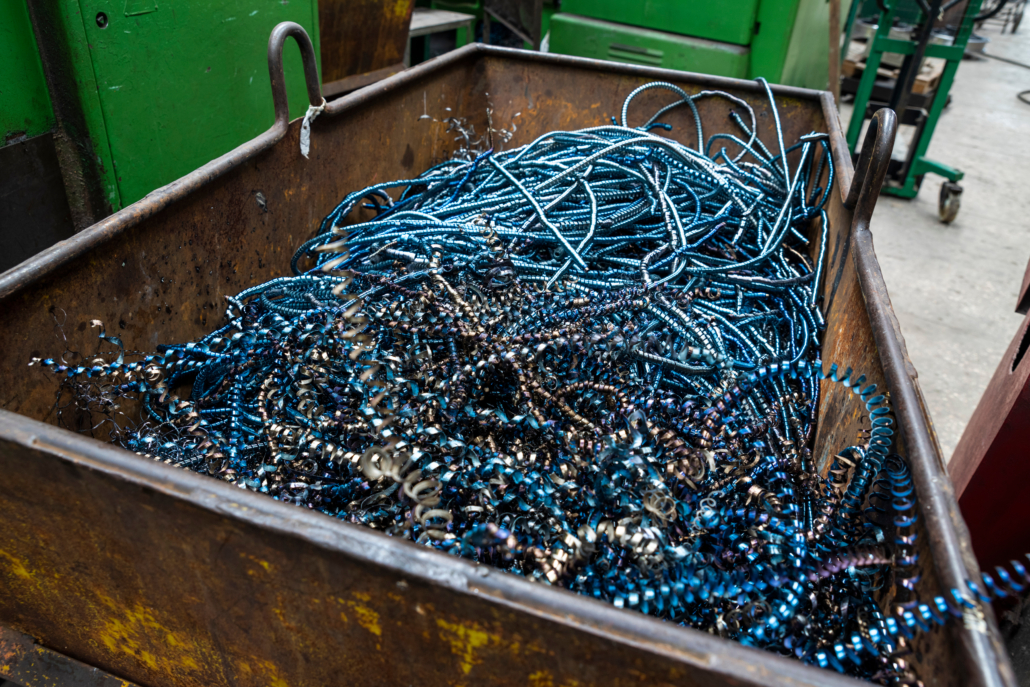
There are also specific shredders for metal chips and electronic scrap, designed to process lighter or more delicate materials.

Key Components and Control Systems

  • The performance of a shredder largely depends on its blades, motors, and hydraulic systems. High-strength steel blades require regular maintenance and sharpening to ensure durability.
  • High-performance industrial motors provide the power needed to process large volumes of scrap, while hydraulic systems apply the appropriate force in each operation.
  • Automation and electromechanical control systems improve efficiency, optimize energy consumption, and increase operational safety.

Benefits of Using Shredders in Recycling

The use of scrap shredders offers significant advantages:

  • Reduces the volume of metal waste, optimizing storage and transportation.
  • Improves the quality of recycled material by facilitating impurity separation.
  • Increases efficiency in recycling plants.
  • Supports the circular economy by enabling the reuse of metals such as steel, aluminum, and iron.

Additionally, by reducing the need to extract new raw materials, environmental impact and energy consumption are significantly lowered.

New or Used Scrap Shredders

When acquiring a shredder, it is important to evaluate whether to choose new or used machinery.

New shredders offer greater warranty coverage, advanced technology, and a longer service life. Used machines may involve a lower initial investment but require a thorough technical inspection to avoid unexpected costs.

In both cases, preventive maintenance is essential. Regular inspection of blades, hydraulic systems, and electrical components ensures safe and efficient operation.

Conclusion

Scrap shredders are fundamental in metal recycling. They reduce volume, improve the quality of recovered material, and optimize industrial processes. Proper selection, maintenance, and automation not only increase productivity but also strengthen sustainability and support the development of a more efficient and responsible circular economy.

Metal recycling is a fundamental practice for sustainability and the circular economy. It helps reduce the extraction of raw materials, lower pollution, and make the most of resources that can be reused multiple times without losing quality. Metals such as aluminum, steel, and copper have high industrial value, and their recycling represents significant energy and environmental savings.

Importance of Metal Recycling

Recycling metals significantly reduces energy consumption and pollutant emissions associated with mining and primary production. For example, recycling aluminum can save up to 95% of the energy required to produce it from raw materials.

In addition, recycling helps to:

  • Reduce waste in landfills
  • Lower waste management costs
  • Boost employment in the sector
  • Promote a more sustainable industryTodo ello refuerza un modelo económico más eficiente y respetuoso con el entorno.

All of this strengthens a more efficient and environmentally responsible economic model.

Metal recycling

Recycling Processes and Technologies

The process begins with the collection and sorting of metals. Afterwards, techniques such as the following are applied:

  • Shredding to reduce size
  • Magnetic separation for ferrous metals
  • Eddy current separation for non-ferrous metals
  • Smelting and refining to obtain reusable ingots

New technologies, such as automated systems and high-efficiency machinery, are improving material recovery rates and reducing environmental impact.

Types of Recyclable Metals

Among the main recyclable metals are:

  • Aluminum, used in packaging and automotive industries
  • Copper, essential in electricity and electronics
  • Steel, widely used in construction
  • Nickel, key in batteries and alloys

Their nearly infinite recyclability makes them strategic materials for the circular economy.

Current Challenges

Metal recycling faces challenges such as waste contamination, transportation costs, market price fluctuations, and a lack of public awareness. In addition, complex alloys make efficient separation more difficult.

Overcoming these challenges requires technological investment, infrastructure improvements, and environmental education.

How to Participate in Metal Recycling

At an individual level, it is important to properly separate metal waste and use appropriate recycling containers or collection centers.

Companies can implement internal recycling programs, collaborate with authorized waste managers, and train employees in environmental best practices.

Conclusion

Metal recycling is a key element in moving toward a more sustainable and efficient economic model. It helps save energy, reduce the extraction of natural resources, and lower pollution, while also driving industrial development and technological innovation. Active participation from both citizens and businesses is essential to maximize its impact and strengthen a circular economy based on responsible resource use.

Organic waste disposers are devices designed to break down biodegradable waste into small particles, making disposal easier and improving waste management in both households and professional environments. Their use contributes to better hygiene, reduces unpleasant odors and pests, and promotes more sustainable practices in the treatment of organic waste.

How organic waste disposers work

The operation of an organic waste disposer is based on a blade system that grinds food scraps with the help of water. The waste is transformed into fine particles that can be easily flushed through the drainage system. Modern models incorporate technologies that improve efficiency, reduce noise, and increase safety during use.

In addition, they include protection systems that prevent blockages, overloads, or accidental activation, making them safe even in domestic environments.

Organic waste disposer

Types of organic waste disposers

There are disposers designed for different needs. Domestic models are compact, easy to install under the sink, and suitable for common food waste. On the other hand, professional and industrial disposers are intended for restaurants, hotels, and businesses, offering greater power and capacity to handle large volumes of waste.

There are also special low-energy-consumption units and wash stations with integrated grinding systems, which further optimize the process and reduce environmental impact.

Advantages of using an organic waste disposer

Using a disposer offers multiple benefits. It improves hygiene in kitchens and workspaces by quickly eliminating organic waste, reduces the appearance of bad odors and pests, and simplifies daily waste management.

From an environmental perspective, disposers help reduce the amount of waste sent to landfills and support processes such as composting and organic recycling. In the long term, their durability and low maintenance make them a cost-effective and efficient investment.

Key aspects to consider when choosing a disposer

When choosing an organic waste disposer, it is important to consider power, capacity, and the types of waste it can process. Available installation space, noise level, and ease of maintenance are also determining factors.

It is also advisable to evaluate the warranty, technical support, and value for money, as a good choice can lead to economic savings and greater efficiency over time.

Prices and most common brands

Prices vary depending on the type of disposer. Domestic models are usually more affordable, while professional and industrial options require a higher investment. Well-known brands stand out for their reliability, efficiency, and ease of installation, offering solutions adapted to different budgets and needs.

Conclusión

Organic waste disposers are a practical and sustainable solution for improving waste management in homes and businesses. They facilitate the disposal of organic waste, improve hygiene, reduce environmental impact, and optimize processes such as composting and recycling. Choosing the right model and using it correctly helps save time, reduce waste, and move toward a more efficient and environmentally responsible waste management model.

If you are looking for a wood chipper to dispose of pruning waste, pallets, or biomass, here we explain—in clear, non-technical terms—what it is, the different types available, key purchasing considerations, and how to integrate it into your operation.

What is a wood chipper?

A wood chipper is a machine that reduces the size of plant waste (branches, boards, pallets, stumps, or post-consumer wood) to facilitate its transport, recovery, or composting. It should be distinguished from a wood chipper: while a wood chipper produces uniform chips from logs and branches, a shredder is more geared towards shredding and reducing mixtures of wood, leaf litter, or heterogeneous materials.

“Less volume, more value: wood ready for recycling or recovery.”

Types of wood shredders (and when to choose each one)

  • Types of wood chippers (and when to choose which one)
    Ideal for high volume (pruning, stumps, mixed green waste). Offers systems to limit projections and improve safety on site.

  • Drum/rotor shredder
    Fixed versions for plants and mobile versions for construction sites or waste parks. Versatile in input sizes and outputs controlled by screens.

  • Industrial shredders for recycling
    At Reverter Industries, we develop specific solutions for wood within our line of industrial shredders and wood recycling plants, which can be integrated into existing lines.

“The right type depends on the material, the volume, and your output goal.”

Key benefits for your operation

  • Volume reduction: fewer trips, lower logistics costs.

  • Size standardization: feeds biomass boilers, presses, or sorting lines.

  • Real circular economy: you turn waste into a resource (wood chips, mulch, recovered solid fuel).

  • Safety and regulatory compliance: equipment and procedures in line with current regulations (see safety section).

How to choose a wood chipper (essential checklist)

  1. Input material: green prunings, pallets with nails, boards, stumps?

  2. Capacity and continuity: actual tons per hour and peak loads.

  3. Desired particle size: defines screens or blade/hammer configuration.

  4. Mobility: fixed plant vs. mobile equipment.

  5. Energy and consumption: installed power and estimated consumption by material and shift. (Consumption varies significantly depending on the type of biomass and operating conditions).

  6. Safety and regulations: UNE-EN requirements for chippers/shredders and INSS(T) best practices.

  7. Integration into your line: belts, metal separators, suction, electrical control.

Take a look at our wood shredder solutions or ask us for a custom design.

Security: what you can’t overlook

UNE-EN 13525:2020 (wood chippers) establishes safety requirements (design, guards, emergency stop, feed zones, etc.). In Spain, INSST NTP 1182 summarizes foreseeable hazards and control measures (projections, entrapments, ejections). Working with compliant equipment and procedures reduces risks and downtime.

Operation and maintenance that extend service life

  • Clean up after each day: this prevents dust/shavings from accumulating (fire hazard) and keeps the feed clear.

  • Lubrication and inspection of moving parts: reduces wear and vibration.

  • Spare parts plan: blades, hammers, screens, and transmission components.

  • Electrical and safety check: emergency buttons, guards, interlocks.

Common use cases

  • Municipal management of pruning and green waste → preparation for composting.

  • Carpentry, logistics, and e-commerce → reduction of pallets and post-consumer wood.

  • Energy recovery → pretreatment for biomass or RDF.

  • Construction and demolition → preparation of wood containing foreign objects (nails/staples) prior to sorting.

Discover our wood recycling plants

Why Reverter Industries?

With over 75 years of experience designing, manufacturing, and integrating recycling machinery and plants, at Reverter Industries we optimize what you already have and incorporate what you need to close the cycle: crushing, transport, separation, control, and after-sales service. Learn more about us.

Conclusion

In short: choosing the right wood chipper depends on the type of material you process, the actual volume of work, and the output particle size you need. With a good selection—and a simple maintenance plan—you reduce logistics costs, improve safety, and turn waste into value.

At Reverter Industries, we accompany you from start to finish: sizing, integration into your line (conveyor belts, separators, control), commissioning, and after-sales support. If you like, we can review your case and I can suggest the optimal configuration.

Sources

La Unión Europea (UE) ha introducido un impuesto específico para desincentivar el uso de plásticos de un solo uso y fomentar el reciclaje. Esta medida, comúnmente llamada impuesto al plástico no reciclado, busca reducir la contaminación plástica y al mismo tiempo generar ingresos para el presupuesto comunitario. A continuación, se detalla su origen, funcionamiento, fórmula de cálculo, contribución económica, rol en la economía circular y los retos principales que enfrenta en su aplicación.

Origen del impuesto y fecha de implementación

A finales de la década de 2010, la contaminación por plásticos se había convertido en un problema urgente en Europa. Cada año se generaban alrededor de 26 millones de toneladas de residuos plásticos en la UE, de los cuales solo se reciclaba en torno al 30%. Este bajo nivel de reciclaje suponía impactos negativos en el medio ambiente, la salud pública y la economía. Para afrontar esta situación, la Comisión Europea presentó en enero de 2018 una Estrategia para el Plástico orientada a reducir el uso de plásticos y avanzar hacia una economía circular.

Como parte de las medidas derivadas de dicha estrategia, el 1 de enero de 2021 entró en vigor un nuevo recurso propio de la UE basado en los residuos plásticos no reciclados. En la práctica, se trata de un impuesto a nivel comunitario que grava los residuos de envases de plástico que no se reciclan. Esta contribución fue acordada por los Estados miembros durante las negociaciones del presupuesto post-2020, con el doble objetivo de diversificar las fuentes de ingresos de la UE (especialmente tras los gastos extraordinarios por la COVID-19) y de incentivar a los países a reducir sus residuos plásticos. En otras palabras, la UE buscó alinear la política fiscal con sus metas medioambientales, penalizando la falta de reciclaje para impulsar cambios en la gestión de residuos.

¿Cómo funciona y a quién se aplica?

El impuesto al plástico no reciclado funciona como una contribución nacional al presupuesto europeo. Cada Estado miembro debe aportar 0,80 euros por cada kilogramo de residuos de envases plásticos que no recicle. La obligación de pago recae sobre los gobiernos nacionales (no directamente sobre empresas privadas) y se calcula en base a las toneladas de residuos de envases plásticos que terminan en vertederos o incineración en lugar de reciclarse.

Ahora bien, aunque la contribución se exige a los Estados, cada país tiene flexibilidad para decidir cómo reunir esos fondos. En línea con el principio de subsidiariedad, la UE permite a los gobiernos definir las políticas más adecuadas para reducir la contaminación por plásticos y financiar este aporte. Esto ha dado lugar a diferentes enfoques en cada país:

  • Cargo al presupuesto nacional: Algunos gobiernos asumen el coste directamente con fondos públicos, sin crear nuevos gravámenes internos. Esta opción evita trasladar la carga inmediata a la industria o los consumidores, pero reduce el incentivo económico directo para las empresas recicladoras o productoras de plástico.
  • Impuestos nacionales al plástico: Otros países han optado por crear impuestos internos específicos sobre productos plásticos para trasladar el coste a quienes ponen en el mercado envases no reciclables. Por ejemplo, España aprobó a partir de 2023 un impuesto especial de 0,45 € por kilogramo de plástico no reciclado en envases de un solo uso. Este impuesto nacional grava a los fabricantes e importadores de envases plásticos no reutilizables, buscando promover envases con mayor contenido reciclado. Italia legisló una tasa similar (0,45 €/kg) en 2020, pero ha pospuesto su entrada en vigor varias veces (actualmente aplazada hasta 2026) debido a la preocupación por la carga fiscal durante la crisis económica post-COVID. Alemania también ha retrasado la aplicación de su impuesto al plástico hasta 2025 por dificultades técnicas y de consenso. Otros países, como Francia, de momento no han establecido un impuesto interno de este tipo, citando falta de consenso político y complejidades administrativas, aunque todos están obligados a contribuir al recurso europeo igualmente.

En resumen, el impuesto se aplica a los Estados miembros, pero su efecto cascada puede llegar a empresas y consumidores según decida cada gobierno. Los productores de plástico y empresas de bienes de consumo sienten la presión en aquellos países que han optado por repercutir el coste mediante impuestos o tasas nacionales. En todos los casos, la finalidad última es motivar a toda la cadena (desde autoridades hasta industria) a reducir la generación de residuos plásticos no reciclados.

Cálculo del impuesto y aporte al presupuesto de la UE

La base de cálculo de este gravamen es el peso anual de residuos de envases plásticos no reciclados en cada país. La Comisión Europea aplica un tipo uniforme de 0,80 € por kilogramo sobre esa cantidad. Para evitar cargas desproporcionadas en las economías menos desarrolladas de la UE, se estableció un mecanismo de ajuste que reduce las contribuciones de los Estados miembros con menor renta, evitando contribuciones excesivas de estos países.

Las cifras concretas de residuos se obtienen de los datos oficiales que los Estados miembros reportan a Eurostat en el marco de la Directiva de Envases y Residuos de Envases. Dado que dichos datos definitivos se notifican con retraso (normalmente dos años después), las contribuciones inicialmente se calculan sobre estimaciones acordadas entre cada país y la Comisión, con ajustes posteriores una vez disponibles los datos finales. Este método garantiza que el presupuesto de la UE reciba ingresos regulares cada año, realizando correcciones contables más adelante si un país pagó de menos o de más según su desempeño real en reciclaje.

Desde su implementación en 2021, el impuesto al plástico no reciclado se ha convertido en una fuente de ingresos notable para la Unión Europea. En 2021 (primer año efectivo), generó aproximadamente 5.900 millones de euros para las arcas comunitarias, cifra que resultó ser unos 1.100 millones inferior a la estimada, debiendo compensarse en ejercicios posteriores. A medida que se normalizaron los reportes, la recaudación aumentó: en 2023 aportó alrededor de 7.200 millones de euros al presupuesto de la UE, equivalentes al 4% de los ingresos totales de ese año. Esto significa que una fracción significativa (varios puntos porcentuales) del presupuesto anual comunitario proviene ya de este recurso propio “verde”. Para ponerlo en contexto, estos ingresos complementan a otras fuentes tradicionales del presupuesto europeo, como los derechos de aduana, el porcentaje del IVA o las contribuciones nacionales basadas en el PIB.

Impulso a la economía circular y al reciclaje

Además de su función recaudatoria, este impuesto está diseñado como una herramienta para impulsar la economía circular en Europa. Al gravar económicamente el residuo plástico no reciclado, se crea un incentivo directo para mejorar las tasas de reciclaje y reducir la cantidad de plásticos de un solo uso. Los Estados miembros tienen motivación para implementar políticas que minimicen sus residuos plásticos (pues así reducen su contribución a la UE). Esto puede lograrse a través de diversas acciones: desde programas de reciclaje más eficientes, hasta fomentar envases sostenibles o materiales alternativos y sistemas de retorno y reutilización de envases en la industria.

La medida se alinea con los objetivos comunitarios de reciclaje. Por ejemplo, la Directiva de Envases exige que al menos 50% de los residuos plásticos de envases se reciclen para 2025, y llegar al 55% en 2030. Penalizando la porción no reciclada, el impuesto ayuda a empujar a los países hacia el cumplimiento de estas metas ambiciosas. Para las empresas, indirectamente supone una señal de mercado: los productores y distribuidores son animados a incorporar mayor contenido reciclado en sus envases y a rediseñar productos para que sean más fácilmente reciclables, ya que si sus envases terminan como residuos no reciclados, eventualmente eso genera un coste para el país (que puede revertirse en mayores impuestos o regulaciones nacionales para el sector).

Un ejemplo claro del impulso a la circularidad es el caso de Reino Unido, que pese a no pertenecer ya a la UE, adoptó en 2022 un impuesto a los envases de plástico con menos de 30% de contenido reciclado, cobrando 210 libras por tonelada a fabricantes e importadores. Esta iniciativa británica, similar en espíritu a la europea, ha estimulado la demanda de plástico reciclado, encareciendo las opciones no recicladas e incentivando a la industria a usar material reciclado. En la UE continental, países como España permiten que las empresas deduzcan del cálculo del impuesto nacional la parte de plástico reciclado que contenga el envase, con el objetivo de premiar el uso de material reciclado y no penalizarlo en la cadena productiva. Todas estas medidas complementarias refuerzan la transición hacia una economía circular donde el plástico se mantiene dentro del ciclo productivo (mediante reciclaje y reutilización) en lugar de convertirse en residuo desperdiciado.

En el largo plazo, el impuesto al plástico no reciclado pretende no solo recaudar fondos, sino cambiar comportamientos: que los Estados inviertan en mejores infraestructuras de gestión de residuos, que las empresas innoven en materiales y modelos de negocio más sostenibles, y que los consumidores adopten hábitos de reducción y separación de residuos. De esta forma, el instrumento fiscal apoya la visión de una Europa climáticamente neutra y circular, donde el crecimiento económico se desacopla del consumo de recursos vírgenes y la generación de desechos.

Principales retos de su aplicación

A pesar de sus objetivos loables, la puesta en marcha de este impuesto enfrenta diversos desafíos técnicos, administrativos y políticos. Entre los principales retos de su aplicación destacan:

  • Fiabilidad de los datos y armonización: Una dificultad central ha sido asegurar que todos los países midan y reporten de forma uniforme sus residuos plásticos reciclados y no reciclados. El Tribunal de Cuentas Europeo advirtió en 2024 que existían “serias dudas sobre la fiabilidad de las estadísticas” que sustentan el cálculo del impuesto. Solo 5 Estados miembros habían transpuesto completamente las actualizaciones legales de definiciones de envase y plástico tras 2018, lo que significa que la mayoría operaba con metodologías distintas o desactualizadas. Esto deriva en posibles inconsistencias en la base de datos: diferencias en la interpretación de qué se considera “plástico reciclado” o en qué punto se mide el reciclaje pueden alterar las cifras reportadas. La Comisión Europea se ha comprometido a mejorar la comparabilidad de los datos –por ejemplo, implantando en 2026 una nueva metodología de reporte armonizada–, pero mientras tanto la calidad de los datos varía entre países, dificultando un cálculo preciso y justo para todos.
  • Ajustes retroactivos y brecha de ingresos: Debido a las limitaciones de los datos iniciales, han surgido diferencias entre las contribuciones estimadas y las reales. Como se mencionó, en 2021 la recaudación final (5.900 M€) quedó por debajo de lo anticipado en unos 1.100 M€, obligando a ajustes al alza posteriores. Estos desajustes crean incertidumbre presupuestaria y evidencian que algunos países probablemente sobrestimaron su capacidad de reciclaje al hacer las previsiones. El riesgo opuesto –subestimar residuos para pagar menos– preocupa a las instituciones, aunque hasta ahora no se han hallado pruebas de que ningún Estado infradeclare intencionalmente sus cifras. Resolver la brecha de datos con reportes más rápidos y confiables es clave para la credibilidad y estabilidad de este impuesto.
  • Fraude y exportación ilegal de residuos: Un efecto colateral no deseado es la posible aparición de prácticas fraudulentas o delictivas para eludir el impuesto. Dado que cumplir objetivos de reciclaje tiene ahora repercusiones financieras, se ha detectado un aumento en vertidos y exportaciones ilegales de residuos plásticos para aparentar mayores tasas de reciclado. Europol ha confirmado un “repunte” de actividades criminales vinculadas a residuos plásticos, con casos de materiales declarados como reciclados que acabaron abandonados o quemados fuera del sistema controlado. Estas mafias de residuos buscan burlar tanto la ley medioambiental como el impuesto, aprovechando huecos en la vigilancia transfronteriza. El desafío para la UE y los Estados miembros es reforzar la trazabilidad de los residuos (por ejemplo, asegurando que los plásticos exportados fuera de la UE realmente sean reciclados bajo estándares equivalentes) y aumentar las inspecciones para impedir estas prácticas ilícitas. La Comisión ha reconocido que sus competencias de inspección son limitadas –dependen en gran medida de las autoridades nacionales–, por lo que urge a los gobiernos a auditar y controlar mejor las operaciones de reciclaje en sus territorios.
  • Aplicación desigual y resistencia política: La introducción de impuestos al plástico no ha ocurrido de forma homogénea en toda Europa, reflejando distintas prioridades y grados de aceptación política. Mientras países como España o Portugal avanzaron rápidamente con impuestos nacionales alineados al recurso europeo, otros como Italia y Alemania han pospuesto repetidamente su implementación, y Francia directamente no ha llegado a plantearla aún. Esta disparidad responde a diferentes circunstancias económicas y presiones de la industria en cada país. En varias naciones, sectores industriales han expresado preocupación por los costes adicionales que supondría el impuesto, especialmente tras la pandemia. Por ejemplo, en Italia se argumentó que la tasa perjudicaría a las empresas en un momento de debilidad económica, logrando aplazar su entrada en vigor hasta siete veces. La falta de consenso político también ha sido un freno importante –como en Francia– debido a debates internos sobre cómo diseñar el impuesto sin dañar la competitividad o encarecer productos básicos. Todo esto pone de manifiesto la complejidad administrativa y política de coordinar una medida fiscal medioambiental a escala continental. Convencer a todas las partes implicadas (gobiernos, industrias y ciudadanos) de los beneficios a largo plazo sigue siendo un reto, especialmente cuando los costos se sienten en el corto plazo.

En síntesis, aunque el impuesto europeo al plástico no reciclado es una iniciativa pionera y ambiciosa para promover la sostenibilidad, su implementación conlleva desafíos importantes. Superar estas dificultades requerirá mejoras técnicas (en datos y control), cooperación internacional para frenar el fraude, y voluntad política para armonizar las soluciones sin diluir los objetivos ambientales. Pese a todo, el consenso general en el sector de la gestión de residuos es que este tipo de instrumentos son necesarios para acelerar la transición hacia una economía circular, internalizando en el coste económico el impacto medioambiental de no reciclar. Con ajustes y aprendizajes continuos, el impuesto al plástico no reciclado en la UE puede convertirse en un modelo de cómo usar la fiscalidad para impulsar la innovación en reciclaje y la responsabilidad compartida en la lucha contra la contaminación plástica

mantenimiento de una cinta transportadora

The maintenance of a conveyor belt is essential to ensure its correct operation in various industries. Proper maintenance has a direct impact on the productivity and operational efficiency of the system. Performing preventive actions and regular checks minimizes the risk of failure and prolongs the life of the equipment. In addition, the correct attention to its key components contributes to the safety and profitability of industrial operations.

Importance of Conveyor Belt Maintenance

The correct maintenance of conveyor belts is essential in the performance of various industries. This process ensures operational continuity and contributes to the effectiveness of equipment in material handling.

Impact on productivity and efficiency

The good condition of a conveyor belt translates into a significant improvement in productivity. When these machines work properly, workflows are optimized, avoiding bottlenecks that can disrupt production. Operational efficiency is benefited by:

  • A significant reduction in the time it takes to move materials.
  • Reduced time loss in unscheduled stops.
  • Maximizing loading and unloading capacity.

Long-term economic benefits

Investing in preventive maintenance yields significant economic benefits. Keeping systems in optimal condition avoids costly repairs and extends the life of the equipment. Economic benefits include:

  • Decreased costs of unforeseen repairs.
  • Reduction of operating expenses due to better energy consumption.
  • Higher return on investment due to long equipment life.

Reduced downtime

Implementing a proper maintenance schedule helps predict and fix problems before they impact production. By minimizing downtime, continuity of operations is ensured. This is relevant for several reasons:

  • Loss of income from unplanned downtime is avoided.
  • The workflow remains constant, which improves overall performance.
  • A safer work environment is favored, by preventing failures that can generate risky situations.

Preventive maintenance on conveyor belts

Preventive maintenance is essential to ensure the correct operation of conveyor belts. It consists of a series of programmed activities that seek to anticipate failures and optimize the performance of the equipment.

Preventive Maintenance Basics

This maintenance approach focuses on taking action before problems occur, thereby increasing system reliability. It includes regular inspections, adjustments and attention to the manufacturer’s recommendations.

Strategies to prevent failures

To ensure the continuity of the operation, several effective strategies must be implemented. These include:

  • Perform a vulnerability scan on components.
  • Establish a maintenance schedule that includes specific tasks.
  • Train personnel on proper maintenance and operation procedures.

Periodic reviews and their importance

Regular checks are vital to monitor the condition of conveyor belts. These should include:

  • Visual inspection of all components, looking for signs of wear.
  • Checking the alignment and tension of the belt, avoiding slippage.
  • Evaluation of the lubrication systems and operation of the engines.

By implementing an effective preventive maintenance program, failures that could compromise daily activity are prevented and, therefore, the overall productivity of the system is optimized.

Key Components of a Conveyor Belt

The components of a conveyor belt are essential for its proper functioning. Each part plays a specific role in the transport process, and its proper maintenance is essential to ensure the operability and safety of the system.

Belt and Wear Inspection

Evaluating the conveyor belt is crucial to identify any signs of wear or damage. This component should be reviewed periodically to ensure its integrity.

Misalignment correction

Misalignments can lead to uneven wear on the belt, which can lead to failure. Quickly identifying and correcting these misalignments is vital to maintaining system performance.

Belt and belt maintenance

Belts and belts require special attention, as they are responsible for transporting materials. Inspecting its condition, as well as its tension and possible wear, is essential to prevent inconveniences.

Care of rollers and pulleys

Rollers and sheaves are components that allow the smooth movement of the belt. Its care ensures that the belt does not suffer blockages or stop unexpectedly.

Rotation frequency

It is important to check the frequency of rotation of the rollers, as irregular rotation can indicate problems in the system. Making sure they rotate freely contributes to optimal operation.

Proper lubrication

Lubrication of these components should be done in accordance with the manufacturer’s recommendations. Poor lubrication can lead to increased wear and reduce the life of the rollers.

Motors and motorized systems

Engines are the heart of the conveyor system. Proper maintenance ensures that they operate efficiently and properly for the necessary time.

Lubrication Levels

Controlling lubrication levels in engines is essential to avoid unnecessary friction and overheating. Maintaining the correct levels allows them to run smoothly.

Noise and vibration evaluation

Detecting unusual noises and vibrations in engines can be an indicator of impending problems. Regular monitoring of these factors helps anticipate repairs and avoid unexpected downtime.

Developing an Effective Maintenance Plan

The development of an effective maintenance plan is essential to ensure the optimal operation of conveyor belts. This plan must include a defined schedule, the recording of tasks carried out and the constant analysis of data to implement improvements.

Maintenance schedule

A well-structured schedule is the foundation of successful maintenance. This document should include:

  • Frequency of inspections and maintenance tasks.
  • Classification of daily, weekly, monthly and annual activities.
  • Consideration of factors such as workload and environmental conditions.
  • Manufacturer’s recommendations regarding the care of the equipment.

Task Logging and Follow-Ups

Systematizing all maintenance activities is crucial for control and future planning. It is advisable to keep a record that contains:

  • Dates of inspections.
  • Tasks executed and results obtained.
  • Problems detected and corrective actions taken.
  • Data on the team’s performance over time.

Data analytics for continuous improvement

Data collection and analysis are critical to optimizing maintenance processes. This analysis should include:

  • Identification of trends in the performance of the team.
  • Detection of patterns in recurring failures.
  • Implementation of improvements based on concrete data.
  • Adjustments in the maintenance schedule according to the results obtained.

Cleaning and safety procedures

The implementation of cleaning and safety procedures is essential to maintain the functionality and operability of conveyor belts. Below are the cleaning techniques and safety protocols that must be followed.

Cleaning techniques to prevent build-up

Regular cleaning of conveyor belts is essential to prevent accumulation of dust, debris, and other materials. Effective techniques include:

  • Regular disinfection of the tape and associated components.
  • Use of specific detergents to remove adhered residues.
  • Control of the accumulation of debris on rollers and pulleys.
  • Constant inspection of loading and unloading areas to prevent spills.

Security protocols

Safety protocols are essential to ensure a safe working environment during conveyor belt maintenance. These protocols cover several important areas:

Staff training

Maintenance personnel must receive specific training on the operation and safety of conveyor belts. Training should include:

  • Knowledge of proper operating procedures.
  • Training in the use of personal protective equipment (PPE).
  • Training in emergency situations.

Safety measures in the operation

Implementing effective security measures is imperative to reduce risks. The main measures include:

  • Disconnect the electrical power before performing maintenance tasks.
  • Use warning signs and safety barriers in work areas.
  • Perform regular checks of security systems.

Impact of recycling of transported materials

Recycling plays a critical role in improving the environment and operational efficiency within industrial plants. Conveyor belt systems are used to facilitate this process, efficiently moving recyclable materials.

Benefits of recycling in industrial plants

Plants that implement recycling processes obtain multiple advantages. Some of the most prominent include:

  • Waste reduction: Reusing materials helps decrease the amount of waste that ends up in landfills.
  • Resource savings: Recovering recyclable materials reduces the need for natural resource extraction, which decreases environmental impact.
  • Increased efficiency: A well-managed recycling system improves operational efficiency, allowing for a continuous flow of recyclable materials.

Influence on process sustainability

Sustainability is strengthened through recycling, as it promotes a longer life cycle for materials. Some significant aspects include:

  • Decreased carbon footprint: By recycling, the need for energy-intensive industrial processes that generate greenhouse gas emissions is reduced.
  • Conservation of ecosystems: The reduction in the extraction and production of new materials contributes to the preservation of natural habitats.

Recycling of plastics and other recyclable materials

Plastics recycling represents one of the biggest challenges and opportunities in the industry. Types of recyclables include:

  • Plastics: Bottles, containers and other plastic products can be recycled, reducing pollution and the use of virgin resources.
  • Metals: Aluminum and steel are highly recyclable and retain their properties when reused.
  • Paper and cardboard: These materials can be recycled multiple times, contributing to the reduction of tree consumption.

At Reverter Industries we specialize in the development of machinery for the recycling industry, offering innovative and robust solutions for the efficient treatment of materials. Among our most notable equipment are conveyor belts, essential for the transport of materials in classification, recovery and processing plants. Our experience in designing systems adapted to each type of waste allows us to guarantee efficiency, durability and fluid integration with other machines in the process, such as industrial dispensers, pumps, robots or container emptying equipment.

separación por densidad

Density separation is a method used to classify and separate materials based on their density differences. Its application is essential in sectors such as mining and recycling, where it seeks to optimize the recovery of resources. This process is based on the principle that lighter materials float, while heavier ones sink. Several techniques have been developed to implement this form of separation, improving the efficiency and sustainability of industrial operations.

Fundamentals of Density Separation

Density separation is based on the physical differences of materials, being a crucial method in various industrial applications. This section discusses the basic principles and relevance of density difference in sorting and separation processes.

Basic principles

Density separation is based on the premise that materials with different densities can be effectively separated. The key principle is that, in the right medium, lighter materials tend to float, while those of higher density sink. This phenomenon can be observed in various industrial environments, where the efficiency of the separation process is essential.

Separation techniques can be classified into dry and wet methods. In the case of dry separation, the air acts as the separation medium. This type of method is especially useful in the recovery of recyclable materials, as it reduces water consumption and minimizes waste generated during the process. Wet methods are applicable in situations where the use of heavy liquids allows for more effective separation of materials.

Density difference and its importance

The difference in density between materials is a fundamental factor that determines the efficiency of separation processes. Each material has its own density, which can vary significantly between different types of substances. This variability makes the identification and classification of materials crucial in applications such as mining and recycling.

  • Material Classification: Understanding the density of materials allows industries to properly classify components according to their nature. This is essential to maximize efficiency in the recovery of valuable resources.
  • Process optimization: The ability to modulate processes based on material density improves the sustainability and efficiency of industrial operations.
  • Waste reduction: By effectively separating materials, the difference in density contributes to decreasing non-recyclable waste, driving more sustainable practices.

The importance of the density difference also lies in the adaptability of separation techniques to material flows that can be heterogeneous. Variations in the composition of recycled materials are common, so having systems that can adjust to this diversity is essential to achieve optimal results in the separation and recovery of raw materials.

Advances in recycling through densimetric separation

Densimetric separation has evolved significantly in the field of recycling, improving the efficiency and effectiveness of material sorting processes. Thanks to technological innovations, equipment and systems are being optimized to facilitate the recovery of valuable resources.

Innovations in recycling equipment

The development of specific machinery for recycling has made it possible to make significant improvements in densimetric separation. Innovations include:

  • Automated equipment that optimizes the movement and sorting of materials.
  • Real-time weighing systems that allow for instant adjustments during the process.
  • Improvements in separator design that increase efficiency in sorting heterogeneous materials.

These additions have made it easier to process more complex waste streams, ensuring that recyclable materials are handled more efficiently. The implementation of advanced sensors has also allowed for more accurate monitoring of material density in real time.

Densimetric separators and their effectiveness

Densimetric separators are fundamental tools in recycling, as they allow materials with different physical characteristics to be sorted based on their density. Its effectiveness lies in:

  • Ability to separate heavy materials from light materials with high precision.
  • Significant reduction of cross-contamination between different types of materials.
  • Increased use of recyclable materials, improving the economic viability of recycling operations.

The evolution of these separators, from simple devices to complex systems that integrate state-of-the-art technology, has transformed their functionality and effectiveness. Thus, it facilitates the use of materials that were previously considered waste that are difficult to process.

Impact of airflow on separation

Airflow plays a crucial role in densimetric separation, especially in recycling processes. The movement of air allows:

  • Elevate lightweight materials, such as plastics and papers, improving their recovery.
  • Facilitate the separation of denser materials that fall due to gravity.
  • Optimize processing time by reducing the need for manual methods.

Systems that integrate effective airflow control not only optimize the final result, but also contribute to improving the sustainability of the process, reducing energy and water consumption. Precise flow adjustment allows you to navigate the challenges of variability in material density, maximizing recovery and minimizing waste.

Modern technologies and their benefits

Recent technologies have revolutionized the process of density separation. Thanks to innovations in machinery and digital tools, both the efficiency and sustainability of these techniques have been improved.

GSort Densimetric Table

Features and Operation

The GSort Densimetric Table is an example of advanced technology that enables density separation efficiently. This equipment operates using an optimized airflow that facilitates the exact classification of materials according to their density. The GSort is capable of handling materials of various dimensions and adapts dynamically and quickly to different types of flows. Its features include:

  • Precise separation of up to a size of 50 mm, achieving optimal results in different applications.
  • Built-in cleaning system that prevents residue build-up and maintains process quality.
  • Automatic control that adjusts parameters based on the properties of the material to be processed.

New applications and technological development

The evolution of density separation technology is not limited to the GSort. New applications are being developed in various fields, from mining to waste management. Innovations include:

  • Integration of artificial intelligence systems to improve real-time decision-making.
  • Implementation of advanced sensors that monitor material properties and adjust operations automatically.

These advances allow for greater adaptation to variable materials and maximize operational efficiency, resulting in significant cost reduction and increased productivity.

Optimizing energy performance

One of the main benefits of modern technologies is the improvement in energy performance. The new methods implemented in machinery allow:

  • Reduction in energy consumption compared to traditional techniques.
  • Possibility of operating in dry environments, reducing dependence on water resources and minimizing environmental impact.

This optimization not only provides significant savings in operating costs, but also contributes to the sustainability of industrial practices in the current context.

Specific industrial applications

Industrial applications of density separation are essential to maximize efficiency in recycling and mining processes. These techniques allow different materials to be classified and treated, optimising the use of resources and improving the quality of the final product.

Sorting materials in recycling plants

In recycling facilities, the correct separation of materials is essential to ensure the purity of the recovered materials. The classification is done using advanced technologies that use the difference in densities. Densimetric separation systems are able to discriminate between light and heavy materials, making it easier to group recyclables. This process includes:

  • Densimetric separators that classify materials according to their specific weight.
  • Optimisation of the recovery of plastics, metals and papers, allowing better profitability of recycling.
  • Improvement in the quality of recycled materials, increasing their value in the market.

Use of conveyor belts and separators

Conveyor belts are a key component in the operation of recycling plants. These allow the efficient movement of materials into the densimetric separators. The correct alignment of these systems ensures that the materials are evenly distributed, improving the efficiency of separation. Highlights include:

  • They facilitate a continuous flow of materials, avoiding bottlenecks in processing.
  • They allow the integration of technologies that optimize separation, such as the use of air to lift lighter materials.
  • They minimize manual handling, reducing operating costs and improving safety.

Size reduction for effective separation

To achieve effective separation, it is often necessary to reduce the size of incoming materials. Grinding and crushing are processes that allow smaller particles to be obtained, which facilitates separation. This approach is essential for the following reasons:

  • The finer particles allow for more efficient interaction with the separation media, improving overall performance.
  • Reduction of the amount of non-recyclable materials, increasing the purity of the final product.
  • It facilitates the treatment of more heterogeneous waste streams, allowing greater flexibility in processing.

Do you want to optimize your recycling processes with advanced technology? At Reverter Industries, we offer  high-precision densimetric separators to improve material sorting and maximize resource recovery.

Guía de Mantenimiento para Maquinaria de Reciclaje

Proper maintenance of recycling machinery is critical to ensuring its efficiency and durability. A good maintenance plan not only improves the performance of the equipment, but also contributes to the safety of the recycling process. This article provides a comprehensive guide to the most effective maintenance strategies. Various types of maintenance, their importance and how to implement a plan that optimizes the operation of machinery will be addressed.

Importance of Maintenance in Recycling Machinery

Proper maintenance of machinery in recycling is essential to ensure optimal operation and extend the useful life of the equipment. A proactive approach in this area can offer multiple benefits.

Advantages of Proper Maintenance

Implementing a well-structured maintenance program provides several significant advantages:

  • Increased operational efficiency, as machines operate at their full potential.
  • Reduced operating costs due to fewer unplanned repairs and extended downtime.
  • Extended machine life, resulting in fewer long-term investments.
  • Improved quality of recycled material, which positively influences the final product.

Impact on Production and Safety

The relationship between maintenance and production is crucial, as well as its effect on occupational safety.

Equipment and Plant Protection

Regular maintenance ensures that machinery is in optimal condition, avoiding failures that can cause severe damage not only to equipment, but also to facilities. This translates into proper operation and prevention of incidents that could have costly consequences.

Personnel Safety

A well-maintained work environment minimizes the risks of accidents. By ensuring that machines are operating properly, operators and other personnel are protected from dangerous situations arising from technical failures.

Types of Maintenance in Recycling Machinery

Recycling machinery maintenance is mainly divided into two categories: preventive maintenance and corrective maintenance, each with specific characteristics and objectives. These practices are key to extending equipment life and maintaining efficient production.

Preventive Maintenance

This type of maintenance aims to prevent problems before they happen. It is based on a proactive approach, where periodic checks and adjustments are made to the machinery.

Long-term planning

It is crucial to establish a schedule that includes all the necessary preventive maintenance tasks. This plan should consider:

  • Scheduled interventions according to the hours of use of the machinery.
  • Periodic reviews of critical systems.

Recommendations for Implementation

For a correct execution, it is recommended to document each intervention and the results obtained. Keeping detailed records helps plan future actions and anticipate maintenance needs.

Corrective Maintenance

Corrective maintenance is carried out after the identification of a fault in the system. It is essential to react quickly to minimize the impact on the operation.

Identification of Common Faults

The most recurrent failures can include:

  • Excessive wear of components.
  • Fluid leaks or electrical problems.

Effective Redress Strategies

Effective redress requires:

  • Accurate diagnosis of the problem.
  • Use of quality spare parts and follow procedures recommended by the manufacturer.

Maintenance Plan for the Recycling Plant

A well-designed maintenance plan is crucial to ensure the optimal operation of machinery in a recycling plant. This plan should include different strategies and resources to maximize operational efficiency and minimize downtime.

How to Develop a Maintenance Plan

The development of a maintenance plan must be meticulous. It is essential to identify the key components of the machines and establish a schedule of revisions and tasks to be performed.

Factors to Consider

  • Type of machinery: Each piece of equipment has its own maintenance needs.
  • Frequency of use: Determining how often machinery is used helps to schedule proper checks.
  • Failure history: Knowing the operational past of the equipment allows you to anticipate common problems.

Support Tools Needed

  • Computerized maintenance management systems (CMMS): They facilitate the scheduling and tracking of tasks.
  • Checklists: They serve as guides during routine inspections.
  • Documentation: Keeping clear records of interventions and repairs performed is essential.

Spare Parts and Wear Parts Management

Proper spare parts management is vital to avoid delays during the maintenance process.

Identification of Essential Spare Parts

It is necessary to classify the critical parts that are most likely to be required and ensure that they are available at all times.

Inventory Management and Changes

Implementing an effective inventory system is crucial. This includes conducting regular audits to verify the availability of spare parts and avoid surprises during maintenance.

Maintenance Practices in Plastic Recycling

Maintenance practices are crucial to ensure the efficient operation of machinery intended for plastic recycling. Specific care and optimizations that contribute to its effective performance are detailed below.

Specific Care for Plastic Machinery

Cleaning and Protection Techniques

Regular cleaning of machines is essential to prevent the accumulation of plastic waste. These techniques should be followed:

  • Daily cleaning of exterior components to remove dust and debris.
  • Use of non-corrosive products on internal and external surfaces.
  • Implementation of protective treatments on the parts most prone to wear.

Process and Conditions Monitoring

Continuous monitoring allows any malfunction to be identified:

  • Real-time monitoring of temperatures and pressures.
  • Periodic review of lubrication and fluid levels.
  • Vibration control to detect possible imbalances in the machinery.

Recycling Process Optimization

Reduced Wear

Minimizing wear and tear on machinery is essential to prolong its useful life:

  • Use of high-quality materials in the components that suffer the most friction.
  • Training of personnel in the correct operation of the machines.
  • Implementation of appropriate preventive maintenance routines.

Increased Equipment Efficiency

To maximize efficiency, it is recommended to:

  • Optimization of the flow of materials to avoid congestion.
  • Regular recalibration of machines.
  • Incorporation of new technologies that improve productivity.

Effective Implementation of Maintenance Strategies

To ensure efficient maintenance in recycling machinery, it is essential to adopt appropriate strategies that ensure its correct operation and extend its useful life. The actions required for a successful implementation are described below.

Staff Education and Training

Continuous staff training is essential to the success of any maintenance strategy. Investing in training provides the team with the knowledge needed to identify potential problems and execute maintenance procedures correctly. Some recommendations include:

  • Conduct periodic workshops on preventive and corrective maintenance.
  • To promote awareness of the importance of maintenance in production efficiency.
  • Include emergency drills to reinforce safety and immediate response practices.

Continuous Monitoring and Data Analysis

Implementing monitoring systems is key to detecting failures before they become major problems. Data analysis allows you to make informed and evidence-based decisions. The actions to be considered are:

  • Install sensors that evaluate the performance of machinery in real time.
  • Use maintenance management software that collects and analyzes usage and wear data.
  • Establish key metrics to evaluate the effectiveness of the maintenance strategies adopted.

Do you want to ensure the maximum performance of your recycling machinery? At Reverter Industries we offer a wide range of recycling machinery designed to optimize every stage of the process and ensure efficient and sustainable results.