
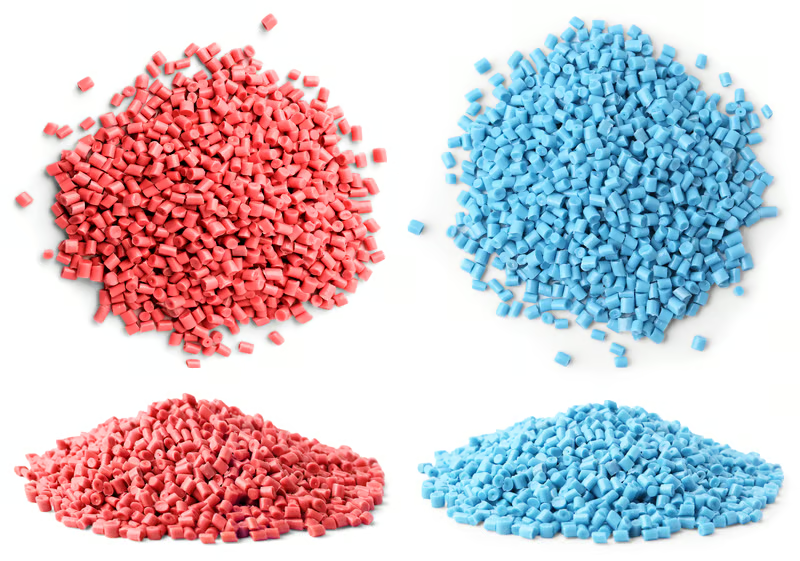
Thermoplastic Examples: Key Applications and Characteristics
Thermoplastics are polymers that soften when heated and harden when cooled. This property allows them to be easily molded, reused, and recycled, making them widely used materials in industry and everyday products.
Characteristics of Thermoplastics
Thermoplastics stand out for several important properties:
- Ability to be molded and recycled multiple times
- Good impact and wear resistance
- Flexibility and ease of manufacturing
- Thermal and electrical insulation in some applications
Thanks to these characteristics, they are versatile materials used in sectors such as automotive, construction, food packaging, and electronics.
Main Examples of Thermoplastics
Some of the most commonly used thermoplastics include:
- Polyethylene (PE): used in bags, packaging, and pipes.
- Polypropylene (PP): used in food containers and automotive parts.
- PET: commonly found in beverage bottles and recycled textile fibers.
- PVC: widely used in construction and electrical insulation.
- Polycarbonate (PC): applied in safety glasses and transparent panels.
- ABS: present in household appliances and industrial components.
- Nylon: used in textiles and mechanical parts.
- Teflon (PTFE): known for its non-stick properties.
Applications in Industry and Everyday Life
Thermoplastics are present in many everyday products and industrial processes. They are used in packaging, toys, electronic components, car parts, construction materials, and medical products.
Their light weight, strength, and ease of processing make it possible to manufacture durable products adapted to different needs.
Manufacturing and Recycling
Thermoplastics are manufactured through processes such as injection molding, extrusion, and thermoforming. One of their main advantages is that they can be recycled and reused in new products, reducing raw material consumption and waste generation.
Recycling these materials is essential for promoting the circular economy and reducing the environmental impact of plastic waste.
Durability and Responsible Use
The strength and durability of thermoplastics help extend the lifespan of many products. However, proper management and recycling are essential to avoid environmental problems associated with excessive plastic waste.
The development of recycling technologies and the responsible use of these materials help improve their sustainability and efficiency.
Conclusion
Thermoplastics are essential materials in modern industry thanks to their versatility, strength, and recyclability. Products such as polyethylene, PVC, and PET are part of many everyday and industrial applications. Their reuse and recycling help reduce waste and support more sustainable and efficient production models.